This is one of the most searched matchups in Japanese learning, and the honest answer surprises people. Genki, WaniKani, and Duolingo are not three options to choose between; they are three tools for three different jobs, and the strongest beginners use all three plus one thing none of them provide. Framing it as a winner-take-all pick is the mistake.
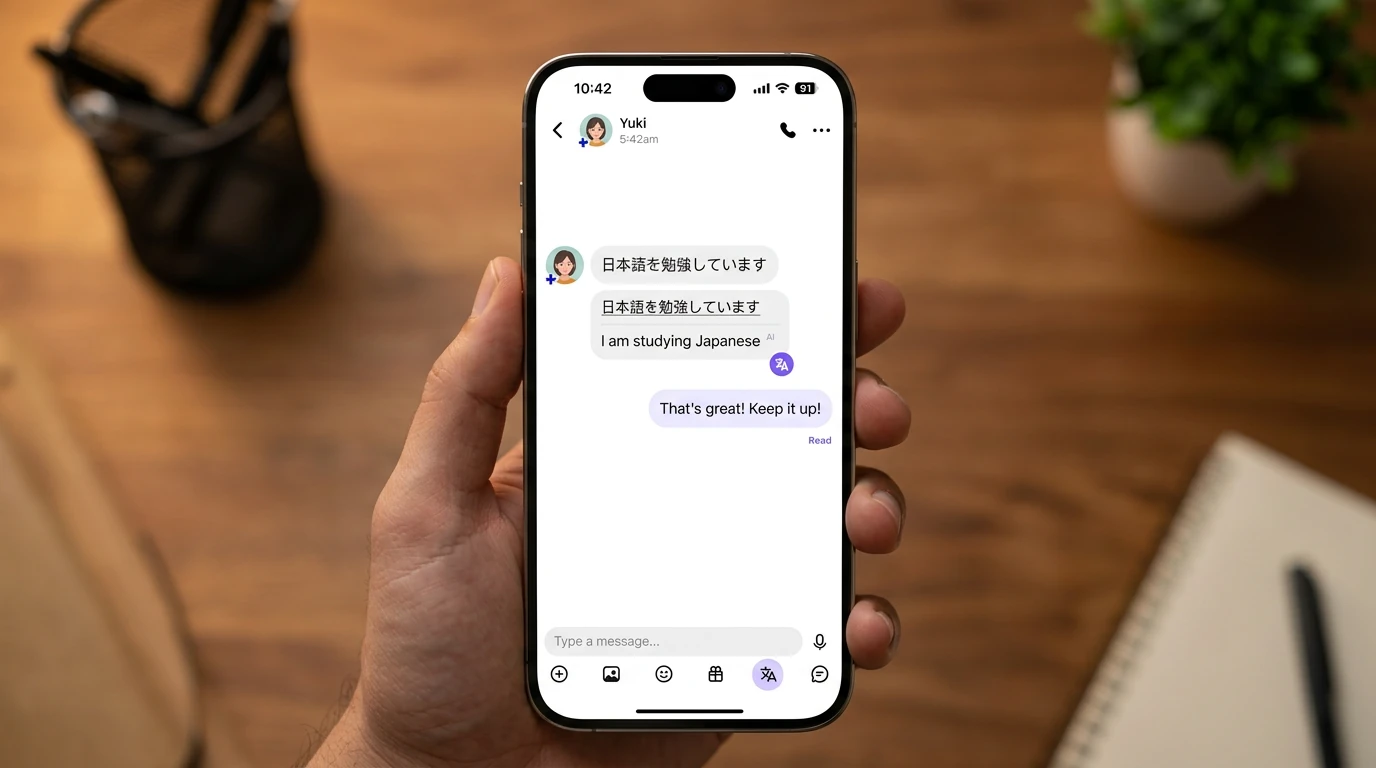
Here is what each one is genuinely for, where each falls short, and how they fit together. For a broader planning framework, see this guide to learning a language fast.
The One-Line Verdict
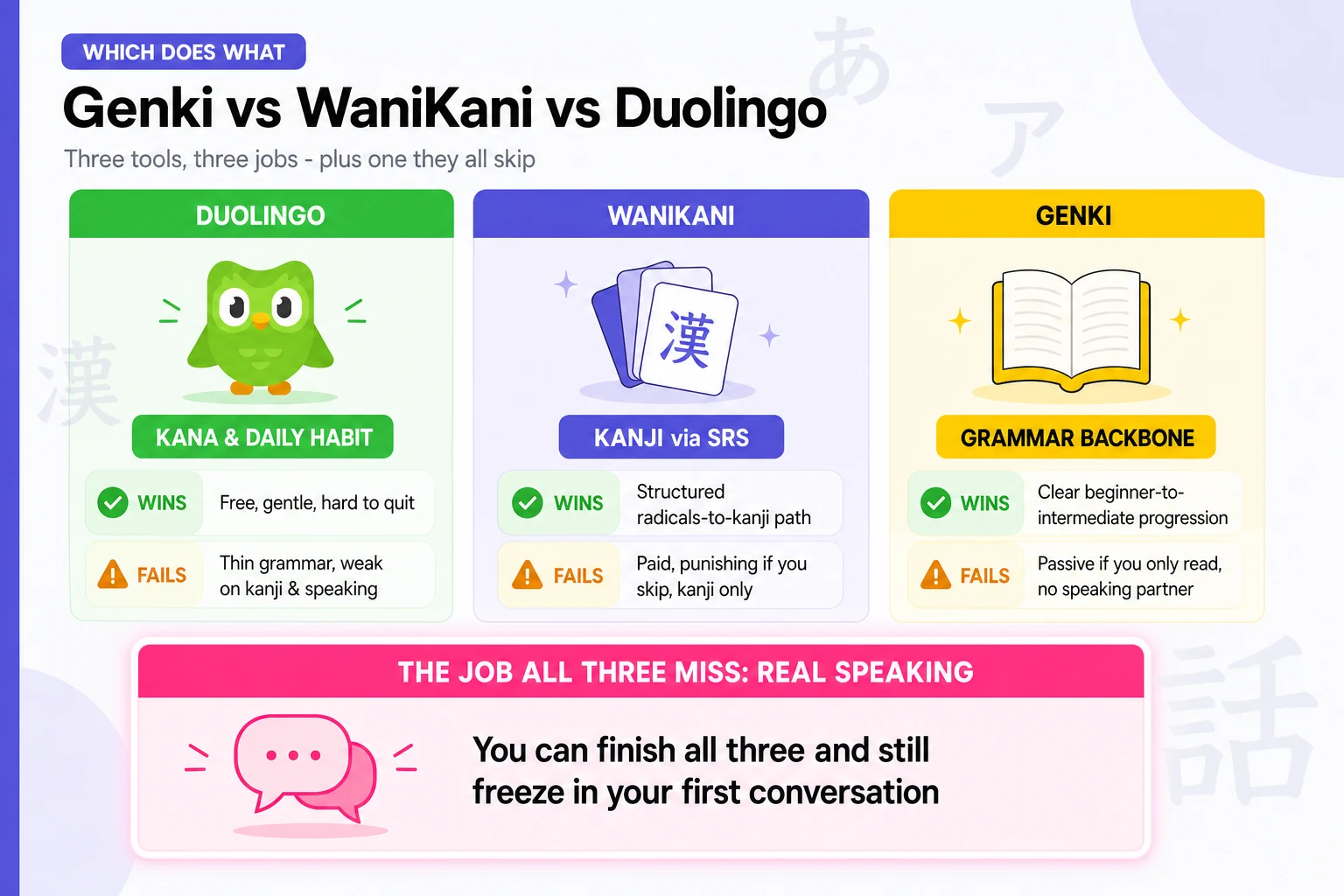
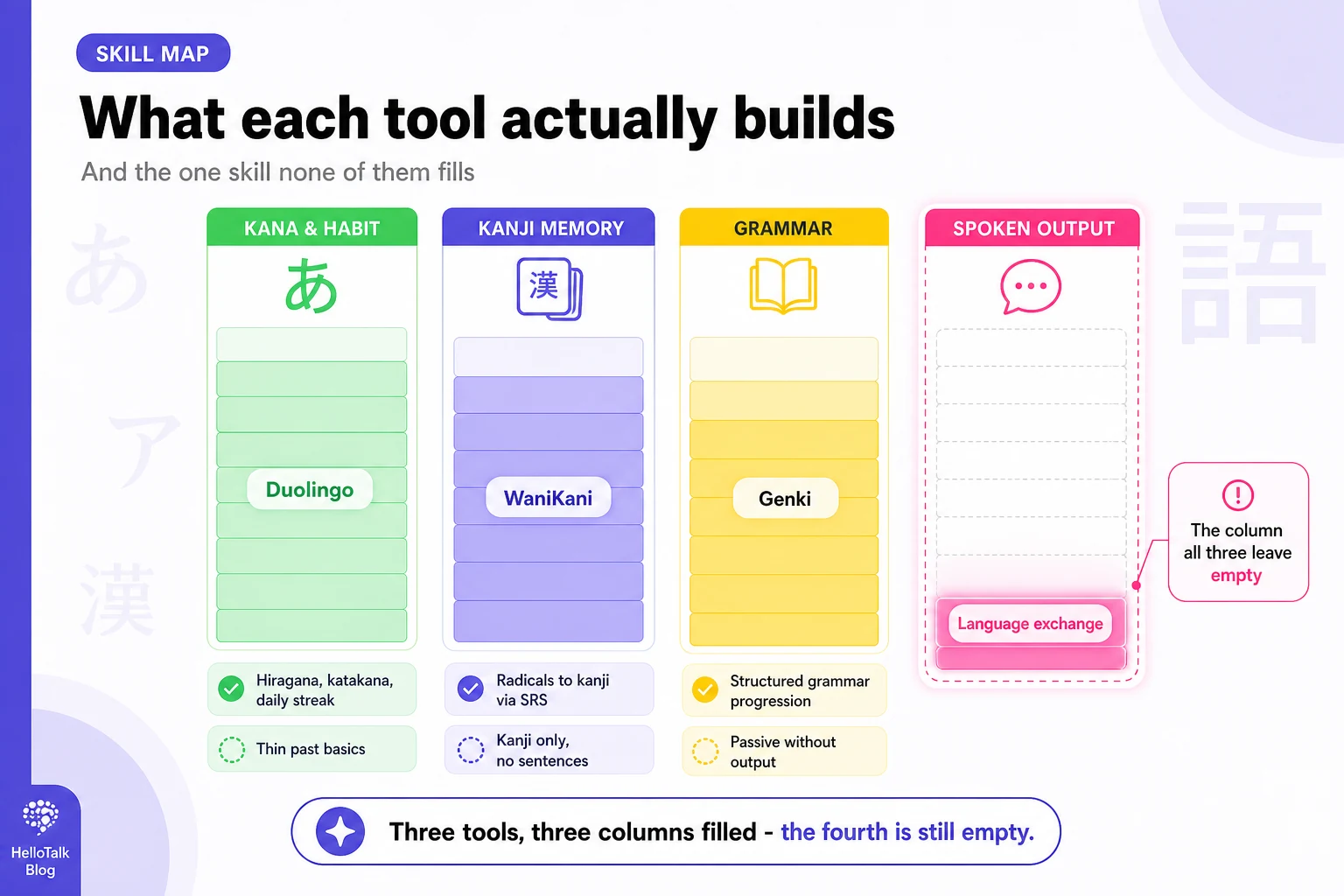
Duolingo builds your first habit and kana, WaniKani drills kanji into long-term memory, and Genki gives you the grammar backbone; the piece all three miss is real speaking. Read that again before you pick, because it settles most of the debate.
| Tool | Job it does | Where it wins | Where it fails |
|---|---|---|---|
| Duolingo | Kana and daily habit | Free, gentle, hard to quit | Thin grammar, weak on kanji and speaking |
| WaniKani | Kanji and vocabulary via SRS | Structured radicals-to-kanji path | Paid, punishing if you skip days, kanji only |
| Genki | Grammar and structure | Clear beginner-to-intermediate progression | Passive if you only read, no speaking partner |
When to Use Each
Start with Duolingo if you have not learned hiragana and katakana yet; it makes the first two weeks painless and builds the daily habit everything else depends on. Move WaniKani in once kana feels comfortable, because it turns the intimidating wall of kanji into a paced, radical-based climb. Add Genki as your grammar spine when you want to build real sentences, working through it chapter by chapter rather than sampling. The trap is thinking that finishing all three means you can speak. You can complete Duolingo’s Japanese tree, hit WaniKani level 30, and read all of Genki, and still freeze in your first conversation, because none of these three tools trains output with a real person.
The Job None of Them Does
Speaking is a separate skill that only real interaction builds. Japanese makes this especially clear: pitch accent, the switch between casual and polite registers, and how native speakers actually shorten sentences are things a flashcard or textbook cannot teach you to produce. One way to add that missing layer is a language exchange app. HelloTalk is worth considering here because its tools can sit alongside Genki, WaniKani, and Duolingo rather than replace them. From a study-design perspective, the useful parts are straightforward:
- Chat tools provide translation, transcription, and correction while you test sentences built from Genki grammar and WaniKani vocabulary.
- Community posts make it possible to compare a textbook-style sentence with the phrasing native speakers would normally use.
- Live audio rooms let a beginner listen before joining, which can make pitch and conversational rhythm easier to notice.
- Pronunciation and grammar feedback provide an extra check when a partner is unavailable. The free tier is enough to test whether this speaking layer improves recall and confidence in practice.
How to Combine All Four
Run them in layers, not in sequence. Duolingo and WaniKani daily for kana and kanji, Genki two or three times a week for grammar, and native-speaker chats from week two so the grammar and kanji become usable. If you are still deciding where Japanese fits among your options, compare the best languages to learn with the languages that demand the most study time.
Common Mistakes
Picking one and ignoring the others’ jobs. They do not overlap enough to replace each other. Letting WaniKani reviews pile up. The SRS only works if you review daily. Reading Genki without producing sentences. Grammar you never speak stays passive. Skipping speaking entirely. The three tools set you up to talk, so actually talk.
Frequently Asked Questions
Is Genki better than Duolingo for Japanese?
They do different jobs. Genki teaches grammar structure clearly, while Duolingo builds kana and a daily habit. For grammar depth Genki wins, but most beginners benefit from using both.
Is WaniKani worth it if I use Duolingo?
Yes, if kanji is your goal. Duolingo is light on kanji, while WaniKani is built specifically to drill it into long-term memory through spaced repetition. They complement each other.
Can I learn Japanese with just Duolingo?
Duolingo covers kana and vocabulary but is thin on kanji, grammar depth, and speaking. Most learners who rely on it alone can recognize far more than they can say.
Do Genki, WaniKani, and Duolingo teach speaking?
No. All three build knowledge and recognition, not spoken output. For speaking you need real conversation practice, such as a language exchange app with native speakers.
In what order should I use them?
Duolingo first for kana, WaniKani once kana is comfortable, Genki as your grammar spine, and speaking practice added by week two so it all becomes usable.
How long until I can hold a Japanese conversation?
With a daily stack plus speaking from week two, many learners manage simple conversations within a few months. Skipping speaking pushes that milestone much further out.
Use All Three, Then Actually Speak
Genki, WaniKani, and Duolingo each do one job well, and together they build a strong base, but the base only pays off when it is used with real people. A short exchange with a native Japanese speaker on HelloTalk is one practical way to test whether that knowledge is becoming usable.