There’s a familiar trap in language learning: you spend weeks researching options, compare app reviews, read ten “best language” lists — and end up choosing nothing. Spanish feels too obvious. Mandarin sounds impressive but terrifying. Japanese keeps calling to you because of reasons you can’t quite explain rationally.
The paralysis is real, and it costs people months they could have spent actually learning.
This guide is designed to cut through it. Not by handing you a single “best” answer — that doesn’t exist — but by giving you an honest framework for making the decision, followed by clear-eyed profiles of the seven strongest options heading into 2026. No hype, no filler.
Why There’s No Universal “Best Language”
Every list that promises to name the best language to learn is, to some degree, lying to you. The best language depends on who you are — your job, your location, your existing skills, what keeps you motivated past the first month.
A software engineer based in Berlin has different needs than a healthcare worker in Miami or a college student in Seoul. The “best” language for any one of them is genuinely different.
What we can do is identify the factors that should actually drive that decision — and then look honestly at the top contenders.
5 Questions That Should Guide Your Decision
1. How Long Are You Willing to Study Before You Can Hold a Conversation?
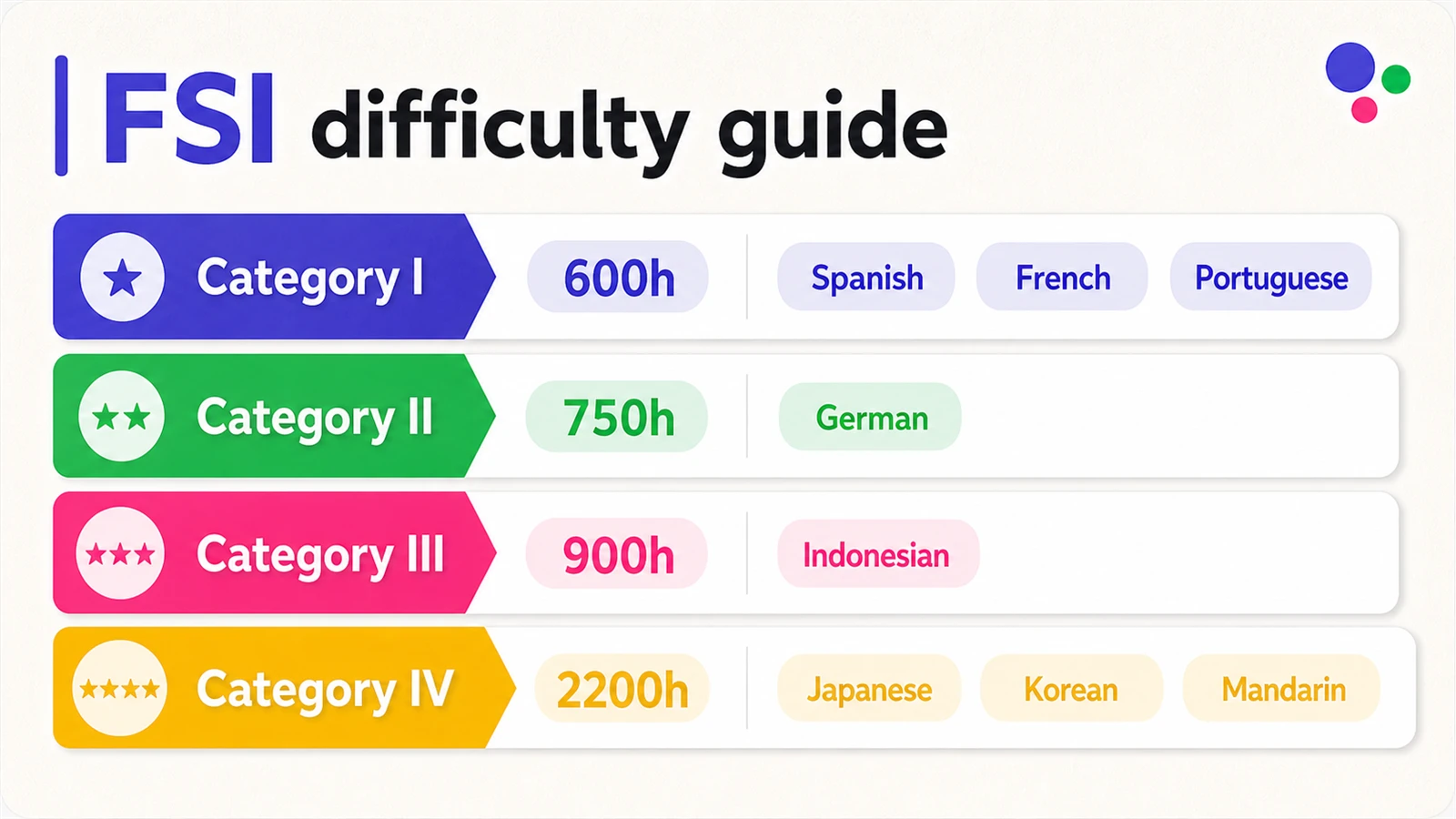
The difficulty gap between languages is larger than most guides admit. For English speakers, languages like Spanish, French, and Portuguese fall into the 600–750 hour range before professional fluency. Mandarin, Arabic, Japanese, and Korean require 2,200+ hours. Both are achievable — the difference is just how long you’re signing up for. The U.S. Foreign Service Institute (FSI) publishes a full comparison table that makes for sobering, useful reading before you commit.
2. What’s the Career Case, Specifically?
“Economic value” is a vague concept until you apply it to your actual situation. Mandarin matters enormously in trade and manufacturing with China. Spanish is the working language of healthcare and social services across much of the Americas. French is essential in international organizations and across fast-growing Francophone Africa. German is the language of European engineering, finance, and automotive industries.
The question worth asking is concrete: Do you work with partners in a specific country? Do you want to relocate? Are there communities in your field or city where speaking another language would make you genuinely more valuable? Let that specificity guide you rather than chasing abstract global rankings.
3. How Many People Speak It, and Where?
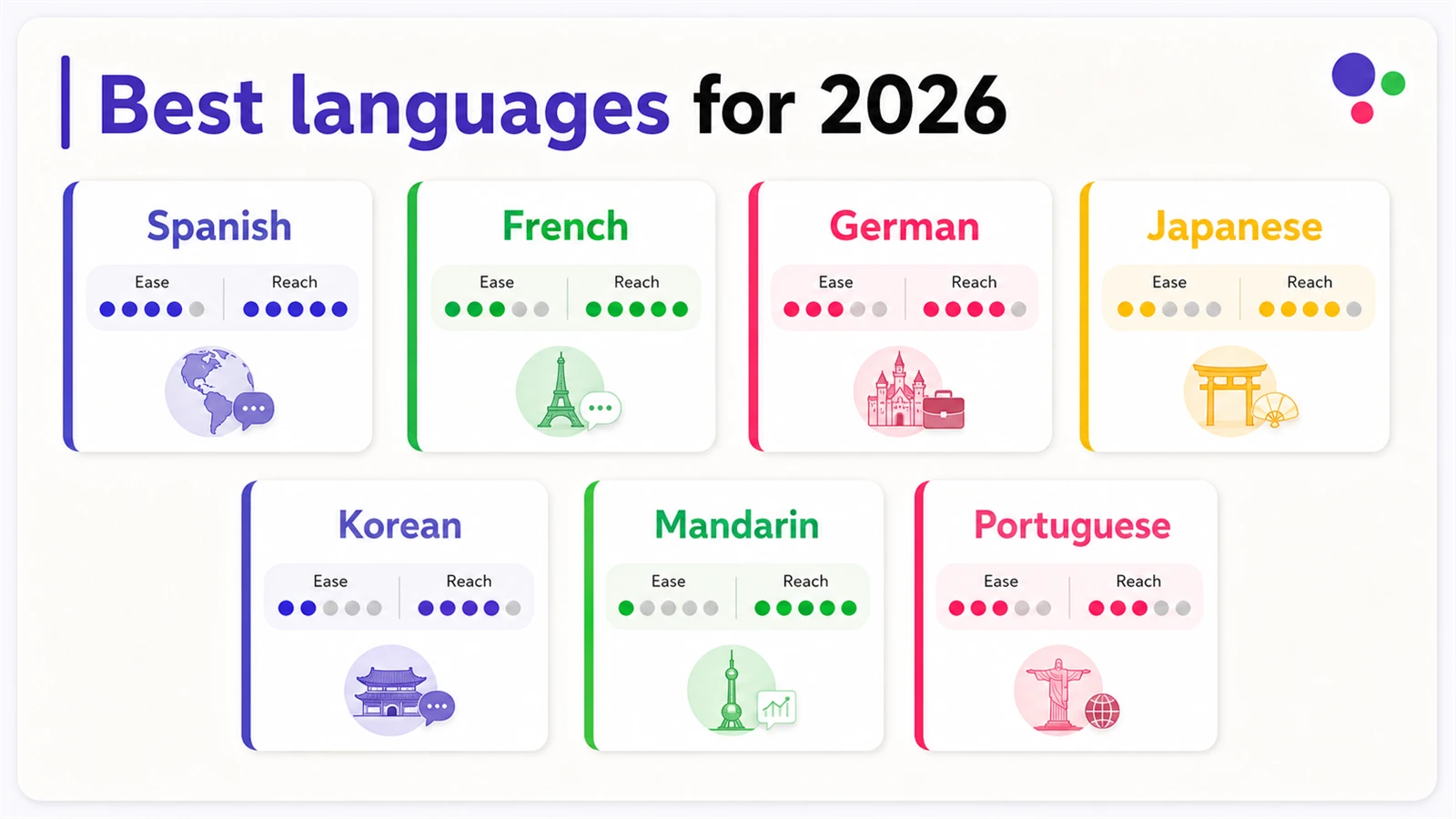
Reach determines how much media you can consume, how many people you can practice with, and how useful your skills become when you travel or change jobs. Here’s roughly where the major languages stand:
- Mandarin Chinese: ~1 billion native speakers, primarily in China and Chinese diaspora communities
- Spanish: ~500 million native speakers across 20+ countries
- Hindi: ~600 million speakers, largely concentrated in South Asia
- Arabic: ~370 million native speakers across the Middle East and North Africa
- French: ~80 million native speakers, but an official language in 29 countries
- Portuguese: ~260 million speakers, with Brazil accounting for the majority
- German: ~100 million native speakers, concentrated in Central Europe
High reach means more practice opportunities, more content to immerse yourself in, and more situations where your skills pay off immediately.
4. Do You Actually Like This Language’s Culture?
This factor gets systematically underweighted in most “best language” discussions, yet in practice it may be the single most important one. Motivation determines whether you finish.
Think about what you already consume voluntarily. Do you gravitate toward Korean drama or Japanese animation? Are you drawn to French cinema or Brazilian music? Do you have family members who speak a language you’ve always wanted to understand? Did a trip somewhere leave you with that electric frustration of wanting to follow conversations around you?
Those aren’t shallow reasons to pick a language. They’re actually the strongest reasons. Genuine cultural attachment means you’ll seek out immersion naturally — you’ll watch shows without subtitles, follow native-speaker accounts, explore music and literature in the language. A language you care about will always outlast the “objectively more useful” one you can’t sustain interest in.
5. How Accessible Is Practice?
You can choose the ideal language, buy the perfect course, and still plateau quickly if real practice is hard to find. Consider: How large is the diaspora community in your city? How much content exists in this language on streaming platforms and YouTube? Are there active online communities of native speakers? How quickly could you find a language exchange partner?
Spanish, French, Mandarin, and Portuguese score very high here — massive online presences, enormous content libraries, and speaker communities in virtually every major city. A niche language like Catalan or Icelandic can be a rewarding passion project, but you’ll need to work harder to manufacture immersion. Language exchange platforms exist precisely to solve this problem — connecting learners with native speakers regardless of geography.
The 7 Strongest Language Choices for 2026
With that framework in mind, here are seven languages that hold up well for most learners this year — with honest profiles of each.
Spanish — Maximum Conversational Return for English Speakers
Best for: People in North or South America, healthcare workers, teachers, travelers, anyone who wants results quickly.
By most practical measures, Spanish delivers the highest conversational return on investment for English speakers. With 500 million+ native speakers across 20+ countries, the reach across the Western Hemisphere is unmatched. It’s also among the most accessible languages for English speakers: the grammar is logical, the spelling is largely phonetic, and the vocabulary shares heavy Latin roots with English, meaning a lot of words are already recognizable from day one.
Time to conversational level: Roughly ~600 hours (FSI Category I) — or about 12–18 months of consistent daily study.
The honest drawback: Spanish has significant regional variation. Castilian Spanish, Mexican Spanish, and Rioplatense Spanish (Argentina and Uruguay) differ enough in pronunciation and some vocabulary that you’ll occasionally feel like you’re relearning things as you encounter new regions. Pick a primary variety and build from there.
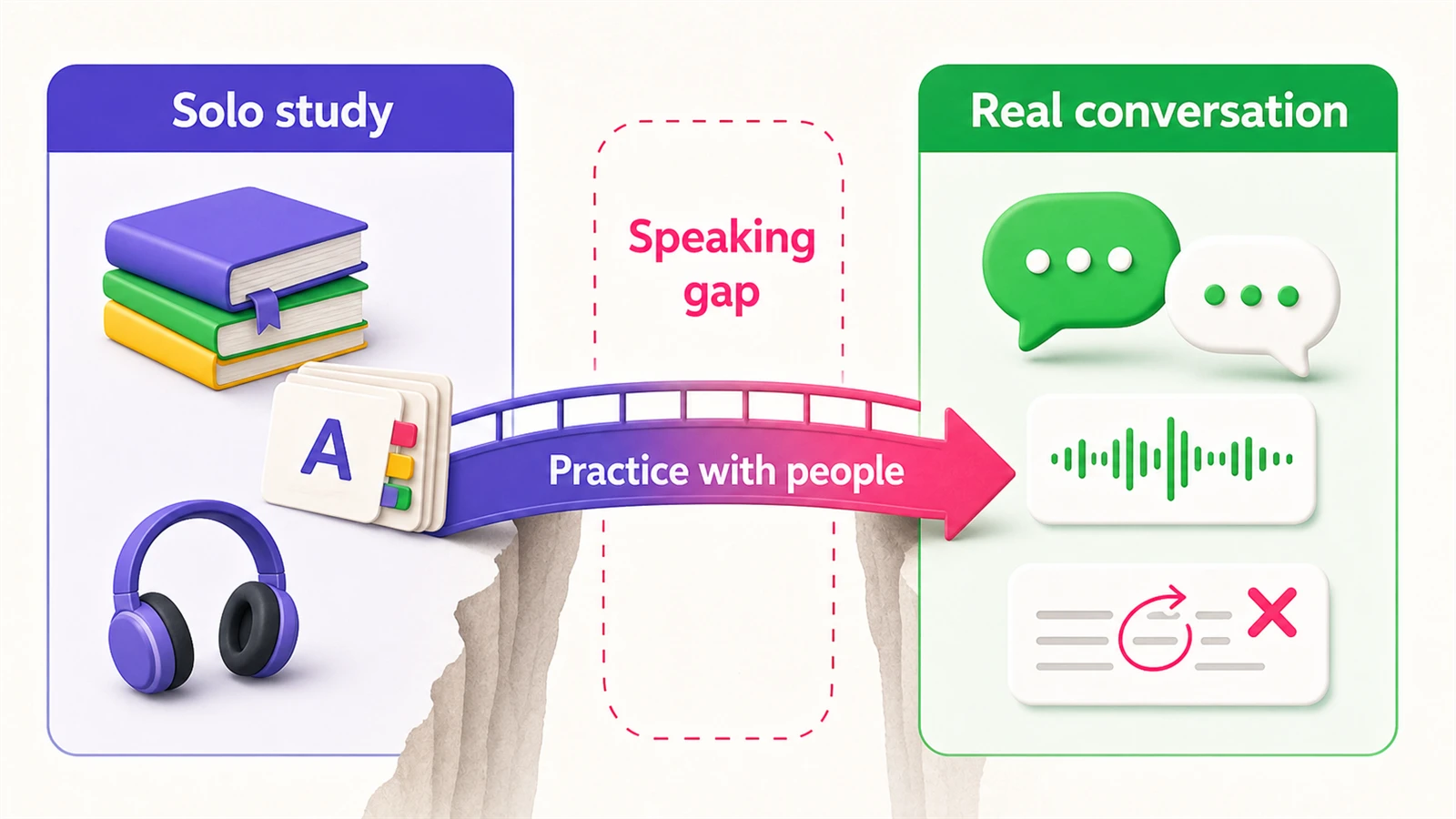
The sheer volume of Spanish content available — podcasts, Netflix series, YouTube channels, music — means you’ll never run out of immersion material. And in most major Western cities, you can find Spanish-speaking conversation partners nearby. The real hurdle most learners hit is breaking out of passive comprehension into actual speaking — that gap requires deliberate practice with real people, not just more grammar exercises.
French — Global Prestige and Underrated Reach
Best for: Those drawn to European culture, anyone targeting international organizations (UN, EU, Red Cross), people interested in Africa’s fastest-growing economies.
French gets dismissed as “nice but not essential” in a lot of learner discussions, and that characterization doesn’t hold up to the data. French is an official language in 29 countries and ranks third among the most widely used languages on the internet. Perhaps more significantly: Francophone Africa is one of the world’s fastest-growing regions demographically and economically. By 2050, more French speakers will live in Africa than anywhere else on earth.
Time to conversational level: ~600 hours (FSI Category I) — same tier as Spanish, though the gap between written and spoken French can feel steeper early on.
The honest drawback: French pronunciation is notoriously challenging for beginners. Silent letters, nasal vowels, and liaison rules create a frustrating early phase where you can read fairly well but understand almost nothing at native conversational speed. That gap is real and takes time to close — but it does close.
For anyone interested in international NGOs, diplomacy, or business across French-speaking Africa, French may actually be undervalued relative to its reputation. Consistent daily practice is the key, and the content library — films, podcasts, news — is deep enough to sustain serious immersion.
German — Europe’s Largest Economy, Underrated by Learners
Best for: Engineers, scientists, academics, and anyone planning to live or work in Germany, Austria, or Switzerland.
Germany has the largest economy in Europe and anchors some of the world’s most significant companies in automotive, engineering, chemicals, and pharmaceuticals. German is also the most widely spoken native language in the EU. Yet in English-speaking language-learning communities, it consistently gets less attention than Spanish or French.
Time to conversational level: ~750 hours (FSI Category II) — somewhat harder than the Romance languages, primarily due to its grammatical case system (nominative, accusative, dative, genitive) and compound noun structures.
The honest drawback: German grammar is legitimately difficult in the early stages. Noun genders, case endings, and verb placement in subordinate clauses can feel arbitrary until the underlying patterns become clear. Most learners hit a real wall around the B1 level. The reward for pushing through is substantial — the language is precise and highly logical once it clicks — but the wall is genuine and worth knowing about before you commit.
One practical note: Germans are, on average, highly proficient English speakers. This is a double-edged sword. You’ll need to be intentional about insisting on German practice rather than defaulting to English, especially in the early stages when the path of least resistance constantly pulls you back to your comfort zone.
Japanese — Pop Culture Pull with Real Depth
Best for: Anime fans, gamers, people drawn to Japanese culture and media, those considering Japan as a travel or work destination.
Japanese has one of the most dedicated learner communities in the world. The motivation is almost always cultural — anime, manga, gaming, J-pop, food culture — and that passion tends to sustain learners through what is genuinely a difficult linguistic climb.
Time to conversational level: ~2,200 hours (FSI Category IV), placing it among the hardest languages for English speakers. Three writing systems (hiragana, katakana, and kanji), an entirely different grammatical structure, and complex levels of politeness all contribute to the difficulty.
The honest drawback: The time investment is real and shouldn’t be minimized. Reaching conversational fluency in Japanese takes most people three to five years of serious, consistent effort. Kanji is an ongoing long-term commitment — native Japanese adults are expected to know around 2,000 characters. Learners should go in with clear eyes about what they’re signing up for.
That said, the payoff is extraordinary for the right person. Japanese media, literature, and professional culture offer experiences genuinely unavailable in any other language. Japan’s learner community is large and welcoming, and modern resources — apps, graded readers, online tutors — are more accessible than they were even five years ago. The key is going in for the right reasons.
Korean — The Fastest-Growing Learner Language
Best for: K-pop and K-drama enthusiasts, people interested in Korean business culture, anyone drawn to East Asian culture without the full complexity of Chinese characters.
Korean has experienced a remarkable surge in learner interest over the past five years, driven primarily by the Korean Wave — BTS, Blackpink, Parasite, Squid Game, Crash Landing on You. Multiple language-learning reports have ranked Korean among the fastest-growing learner languages globally for several consecutive years.
Time to conversational level: ~2,200 hours (FSI Category IV) — but with an important asterisk. Hangul, the Korean alphabet, is famously learnable in a weekend. Once you can read, pronunciation is fairly consistent and the writing system is phonetically regular. The real difficulty lies in grammar (agglutinative verb endings, topic and subject particle distinctions) and the formal versus informal speech level system.
The honest drawback: Korean has relatively limited reach outside South Korea and Korean diaspora communities compared to Spanish or French. It’s more of a passion-driven choice than a broad-reach one — the trade-off is that the cultural pull is genuinely strong, and for many people that’s a more sustainable reason to keep going than abstract career logic.
For learners driven by K-culture, the immersion opportunities right now are exceptional: a constant stream of new content, active fan communities, and native speakers who tend to be enthusiastic about language exchange with foreigners.
Mandarin Chinese — Enormous Weight, Honest Difficulty
Best for: Business professionals in trade, tech, or manufacturing; people with Chinese family heritage; long-term career strategists willing to invest seriously.
Mandarin Chinese is spoken by roughly 1 billion native speakers and is the official language of the world’s second-largest economy. The career and geopolitical case for learning it is genuinely strong. And to be completely direct: for English speakers, Mandarin is one of the most demanding languages in the world.
Time to conversational level: ~2,200 hours (FSI Category IV) — and many experienced learners will tell you that estimate is optimistic. Tonal pronunciation (four tones plus a neutral tone), thousands of characters with no alphabetic system, and grammar that operates on fundamentally different principles from European languages all compound the challenge.
The honest drawback: The learning curve is steep enough that many learners plateau or drop out without a strong anchor. If your motivation is “China is an important economy,” that may not be enough to sustain you through year two. If your motivation is something specific — a business relationship, family connections, a genuine interest in Chinese literature or history — you’ll do significantly better. The reward for those who persist is substantial: access to one of the world’s richest cultural and philosophical traditions, plus business access across an enormous economic sphere.
Portuguese — Underrated, Massive Global Reach
Best for: Spanish speakers looking for a second language, anyone interested in Brazil’s culture and economy, those drawn to lusophone Africa or Portugal.
Portuguese is the quiet dark horse on this list. It’s spoken by around 260 million people across multiple continents, making it one of the most widely spoken languages in the world — yet it punches well below its weight in English-speaking learner discussions, mostly because people assume it’s just harder Spanish.
Time to conversational level: ~600 hours (FSI Category I) — the same tier as Spanish and French. If you already speak Spanish, you can reach functional Portuguese significantly faster, sometimes in a matter of months.
The honest drawback: European Portuguese and Brazilian Portuguese differ noticeably in pronunciation and some vocabulary — enough to genuinely confuse learners who mix resources from both. Choose one variety and stay consistent, at least until you’re solidly intermediate.
Brazil alone has a population of 215 million, the ninth-largest economy in the world, and a culture — music, film, football, food — with outsized global influence. Portuguese also opens doors across Mozambique, Angola, Cape Verde, and other parts of lusophone Africa that are growing in economic significance. For the time investment required, the return is hard to beat.
Once You’ve Decided: Actually Getting Started
Most learners spend months with apps, textbooks, and grammar drills — and then wonder why they still freeze when a real conversation happens.
Apps and structured courses have their place. AI tools have also become a genuine part of the modern learner’s toolkit, especially for getting personalized feedback and low-stakes practice. But language is fundamentally a social tool, and the research consistently shows that the fastest learners are the ones who start using it with real people as early as possible — even when it’s uncomfortable, even when they make mistakes, even when they can barely string a sentence together. That discomfort isn’t a sign that something is wrong. It’s where the actual learning happens.
The practical challenge is finding low-pressure ways to connect with native speakers before you feel “ready” — because the honest truth is that no one ever feels fully ready.
Language exchange is one of the most effective solutions: two people who happen to be each other’s native language resource, practicing together without the pressure of a formal class. Apps like HelloTalk are built around this model, connecting learners with native speakers of their target language — people who are typically learning the learner’s native language in return. The exchange dynamic removes the one-sidedness and makes practice feel like a conversation rather than a performance.
None of this requires a plane ticket or a classroom. It requires a decision, a willingness to be imperfect with a real person, and the habit of showing up consistently.
Frequently Asked Questions
What is the easiest language to learn for English speakers?
Spanish is widely considered the most accessible language for English speakers. It shares Latin roots with much of English vocabulary, uses the same alphabet, and has a largely phonetic spelling system. The FSI estimates around 600 hours to professional proficiency — the fastest category of any language group.
Which language is most useful for business?
It depends on your industry and region. Mandarin is powerful in trade and manufacturing with China. Spanish opens doors across the Americas in healthcare, education, and services. German is essential in European engineering and finance. French is the working language of dozens of international organizations and is growing fast across Francophone Africa. Pick the language that aligns with your specific field and geography.
What language has the most speakers in the world?
Mandarin Chinese has the most native speakers — roughly 1 billion. However, English has the most total speakers when second-language speakers are included. Spanish ranks second among native speakers, with 500 million+ across 20+ countries.
How long does it take to become conversational in a new language?
For Category I languages (Spanish, French, Portuguese), most dedicated learners reach conversational ability in 12–18 months of consistent daily study — roughly 600 hours total. For Category IV languages (Mandarin, Japanese, Korean), plan for 3–5 years of serious effort. It’s worth noting that “conversational” is a spectrum — you can hold basic exchanges much earlier than you can discuss complex topics.
Is it too late to learn a language as an adult?
No. Adults bring real advantages: stronger vocabulary in their native language, better study strategies, and the ability to understand explicit grammar explanations. Children acquire languages more naturally over long time horizons, but adults can reach conversational ability faster in the early stages. The neuroscience is clear that the brain retains language-learning capacity well into old age.
What’s the most effective way to practice speaking with real native speakers?
Language exchange is one of the most consistent methods — find a native speaker of your target language who is learning yours, and practice together. Platforms designed specifically for this kind of exchange make it easier to find partners and build a regular practice habit without requiring travel or expensive tutoring.
Make the Decision. Start Today.
Almost any language on this list will reward you if you stick with it long enough. The best language to learn is the one you actually start — and don’t abandon three months in.
If you want the easiest route to the most conversations, choose Spanish. If you’re pulled by culture, choose the language whose music, films, or people make you feel something real. If you need a career edge in a specific region or industry, let that concrete need be your anchor.
The analysis only matters if it ends in a decision. Pick one language from this list, find a native speaker to practice with, and send your first imperfect message. The grammar will come. The hardest part is starting.