Most people picking up a new language assume effort is the main variable. It is — but the sheer structural distance between your native tongue and the language you want to speak matters just as much. Some languages demand four times as many hours as others, not because learners work less hard, but because the linguistic gap is genuinely that wide.
This guide breaks down which languages sit at the top of the difficulty spectrum, why they’re hard in concrete terms, and what study approaches actually move the needle for learners committed to climbing the steeper hills.
Three Structural Barriers That Drive Difficulty
Linguists have been quantifying language difficulty for decades. The Foreign Service Institute (FSI) — which trains U.S. diplomats — has tested enough learners over enough years to arrive at reliable estimates. Its framework places languages into four difficulty categories based on average hours to professional proficiency. At the top end, Category IV languages demand roughly 2,200 hours — around four times the commitment of French or Spanish.
That gap doesn’t come from arbitrary complexity. It traces back to three structural barriers that are largely absent from Indo-European languages:
- Tonal systems: Mandarin uses 4 tones, Cantonese 9, Vietnamese 6. One syllable can represent entirely unrelated concepts depending on pitch contour. There’s no workaround; you have to internalize tones as part of every word.
- Non-Latin writing systems: Arabic reads right to left and uses a script where most vowels are omitted. Japanese layers three separate scripts — hiragana, katakana, and kanji — plus around 2,000 commonly used Chinese characters. Korean’s Hangul, while internally logical, operates on construction principles that have no Latin parallel.
- Agglutinative or case-heavy grammar: Japanese and Korean stack meaning onto verb roots through successive suffix layers. Arabic nouns have singular, dual, and plural forms; verbs conjugate by gender. Finnish uses 15 grammatical cases. None of this has a close equivalent in English.
FSI Difficulty Rankings at a Glance
| Language | FSI Hours | Core Difficulty | Who Has a Head Start |
|---|---|---|---|
| Mandarin | 2,200 | Tonal system + thousands of characters + gap between written and spoken forms | Learners with Chinese character background |
| Arabic | 2,200 | Right-to-left script + complex root system + severe dialect fragmentation | Learners with a clear regional target (MSA vs. specific dialect) |
| Japanese | 2,200 | Three writing systems + deep honorific hierarchy + ~2,000 common characters | Learners with Chinese character exposure or strong cultural motivation |
| Korean | 2,200 | Agglutinative grammar + SOV word order + multi-level honorific system | K-pop/K-drama fans with high exposure; Chinese heritage learners |
| Cantonese | 2,200+ | 9 tones + shared characters with Mandarin but completely different pronunciation | Mandarin speakers (characters transfer; pronunciation doesn’t) |
| Polish | 1,100 | 7 grammatical cases + consonant clusters + complex gender agreement | Learners with other Slavic language background |
| Russian | 1,100 | Case system + Cyrillic alphabet + verbal aspect system | Learners with any Slavic background |
| Thai | 1,100 | 5 tones + 44 consonants + no word spacing in writing | Southeast Asia enthusiasts or those with tonal language exposure |
| Finnish | 1,100 | 15 grammatical cases + agglutinative structure + vowel harmony | Learners with a linguistics background or strong Scandinavian context |
A CEFR B2 level (“independent user”) typically requires 600–800 hours on a 1,100-hour Category III track. For Category IV languages, reaching B2 often means putting in well over 1,000 hours first.
Difficulty Is Relative to Where You Begin
Most rankings treat difficulty as an absolute property of a language. It isn’t. The hours FSI publishes reflect native English speakers. Shift the baseline, and the rankings shift too.
If Mandarin Is Your First Language
Arabic typically tops the list for Mandarin speakers — zero shared vocabulary, opposite writing direction, and a root-based word construction system that has no counterpart in Chinese grammar. Russian and Polish case systems are also deeply foreign, since Mandarin operates without morphological inflection. The flip side: Japanese and Korean — Category IV headaches for English speakers — come considerably faster for Mandarin speakers because of overlapping character vocabularies.
If English Is Your First Language
The FSI data applies most directly here. Mandarin, Arabic, Japanese, and Korean are the Category IV group. The core blockers are writing systems and tonal pronunciation — both essentially absent from the Indo-European family tree. An English speaker picking up Spanish shares the same alphabet, thousands of cognates, and a broadly familiar grammatical skeleton. None of that applies to Category IV.
If Japanese Is Your First Language
Arabic typically ranks hardest — root-based word construction is structurally alien to Japanese logic. Finnish follows, despite Japanese itself being agglutinative, because the specific suffix mechanics differ completely. Japanese native speakers, on the other hand, often progress in Korean faster than in almost any other language: word order and grammatical structure are nearly parallel, making Korean the closest available shortcut.
Practical Approaches That Actually Work
The study methods that move learners through Category IV languages share a common thread: they prioritize real output and real feedback over passive consumption.
| Challenge | Effective Approach | What It Looks Like in Practice |
|---|---|---|
| Tonal pronunciation | Voice practice with native speaker feedback | Record the same sentence multiple ways; ask which sounds most natural; compare against a native recording |
| Complex grammar | Incremental writing with correction | Write a short daily diary entry in your target language; have native speakers annotate errors with explanations |
| Limited context for practice | Conversation-based topic discussion | Join groups organized around genuine interests; let real topics drive output rather than textbook sentences |
| Unfamiliar writing system | Phonetic annotation tools | Arabic and Japanese text with reading aids above characters reduces the initial recognition barrier significantly |
| Hitting a plateau | High-volume comprehensible input | Podcasts, native media, and language exchanges at your current level; volume matters more than variety at this stage |
Apps like Duolingo work well for A1–A2 foundation-building because they gamify repetition and keep early learners engaged. Past the intermediate stage, particularly for tonal and phonetic accuracy, the most effective resource shifts toward high-density real conversation — the kind of interaction that no quiz format can fully replicate. Platforms like HelloTalk, which connect learners with native speakers for direct exchange, address this gap specifically.
For learners who already have a structural foundation but need large quantities of comprehensible input, finding a consistent native speaker partner and building real conversational output is typically more valuable than adding another structured course.
One Learner’s Six-Month Progress in Japanese
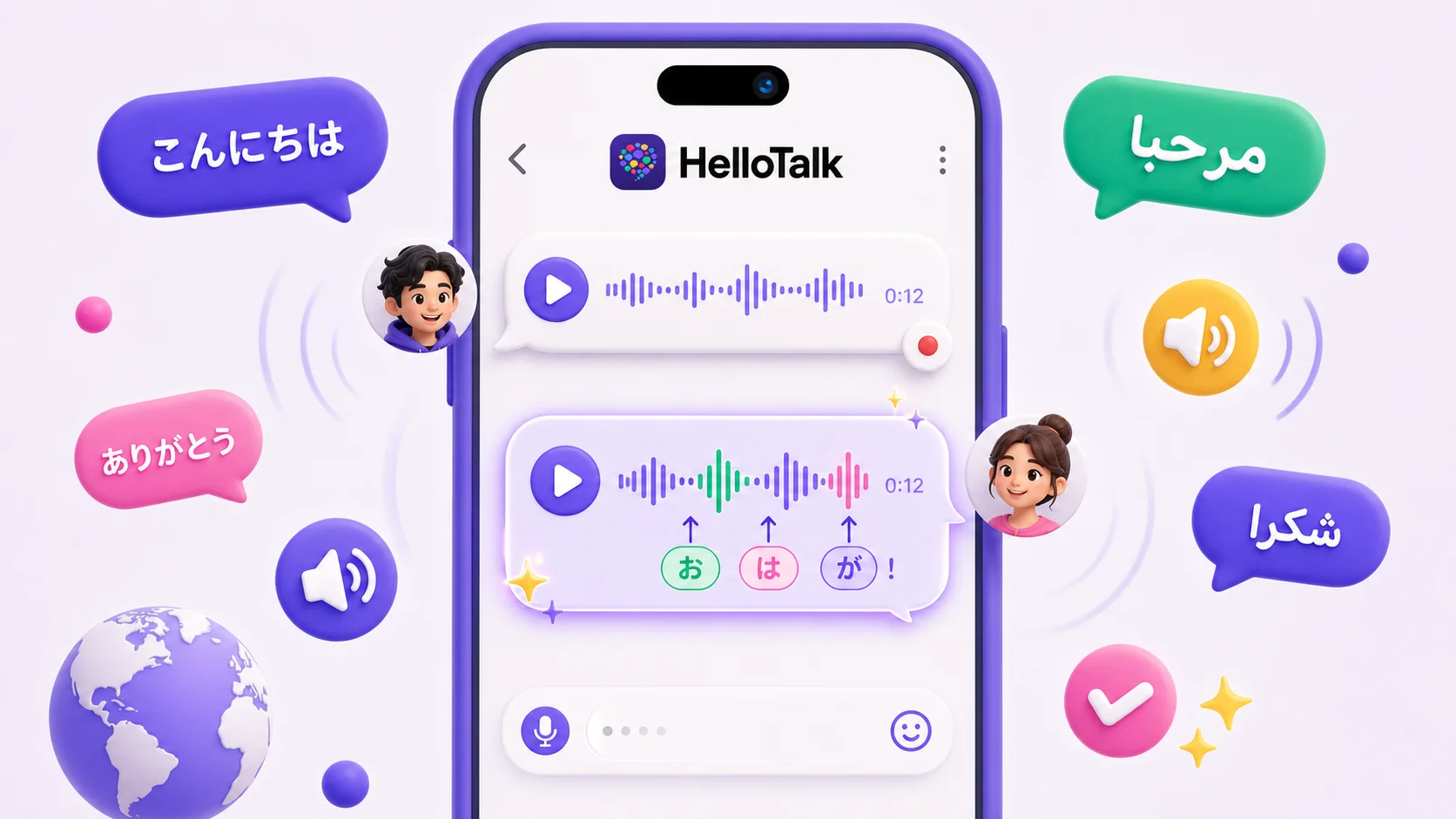
Worth sharing a concrete data point: a Japanese learner who spent six months focused on voice message exchanges and short daily writing entries tracked their JLPT N3 practice test accuracy moving from 52% to 79%. The methodology was simple — record the same sentence multiple ways to isolate tonal and phonetic differences, write 50-character diary entries daily, and log every corrected error using spaced repetition.
The lesson isn’t that this pace is guaranteed. It’s that feedback quality and input density are the actual levers. Hours alone — spread across passive content — don’t produce the same gains as fewer hours with genuine output and response.
Frequently Asked Questions
What is the hardest language in the world?
There’s no single objective answer, but combining writing system complexity, grammatical difficulty, and pronunciation barriers, Arabic and Mandarin are most frequently cited by linguists as the joint-hardest for learners without a relevant background. Japanese ranks close behind — it’s the only major language that simultaneously demands three scripts alongside tonal-adjacent pitch accent.
What is the hardest language for English speakers specifically?
FSI data is unambiguous: Mandarin, Arabic, Japanese, and Korean — all Category IV at 2,200 hours. Among these, Arabic presents an added practical difficulty: Modern Standard Arabic (MSA) governs writing and formal speech, but daily conversation runs on regional dialects — Egyptian, Gulf, Levantine, and others — that are not mutually intelligible. Learners need to decide early which variety they’re actually targeting.
Is Mandarin really harder than Japanese?
For English speakers, FSI places them equally at 2,200 hours, though individual experience varies. Mandarin’s tonal system is arguably steeper to internalize for English speakers; Japanese’s three-script writing system and honorific hierarchy create different friction points. For Mandarin speakers, the situation reverses — Japanese and Korean become comparatively accessible because of shared character vocabulary.
Can adults actually reach fluency in a Category IV language?
Yes — but the timeline is long and the expectations need to match. An adult investing 1–2 hours daily typically reaches CEFR B2 in a Category IV language after 5–8 years. Age isn’t the primary variable; accumulated comprehensible input and the quality of feedback are. Learners who reach fluency fastest tend to have high-density native speaker contact from relatively early in their study.
There’s no shortcut through a Category IV language. But there is a meaningful difference between efficient practice and time spent. The most consistent finding from successful learners across all these languages is the same: real conversation with real speakers, starting earlier than feels comfortable, repeated over years.
If you’re starting out or hitting a plateau, the most practical next step is finding a native speaker of your target language and building regular exchange habits — whether through apps like HelloTalk, language meetups, or whatever consistent format you can maintain over the long run.