When your child changes lesson format, bring forward what they can already use and identify what still needs development. Knowing letters, songs, or early picture books gives the next teacher useful starting material. It does not automatically show that a child can manage an online conversation independently.

AI-generated scene illustration.
Share a list of what your child can use
Tell the new teacher about familiar topics, useful expressions, and small tasks your child can complete. “Recognises animals but needs a prompt when asked which one they like” says more about a starting point than “Has studied English for a year.”
If sharing recordings or course materials, check that you have permission and avoid including other children or teachers without consent. A short description is enough to begin the discussion; you do not need a large portfolio of every previous activity.
Separate reading, repetition, and communication
Reading a card aloud does not necessarily show understanding of the corresponding spoken question. Singing along does not always mean a child can use the same expression for a personal message. A teacher can use one familiar topic for several different tasks.
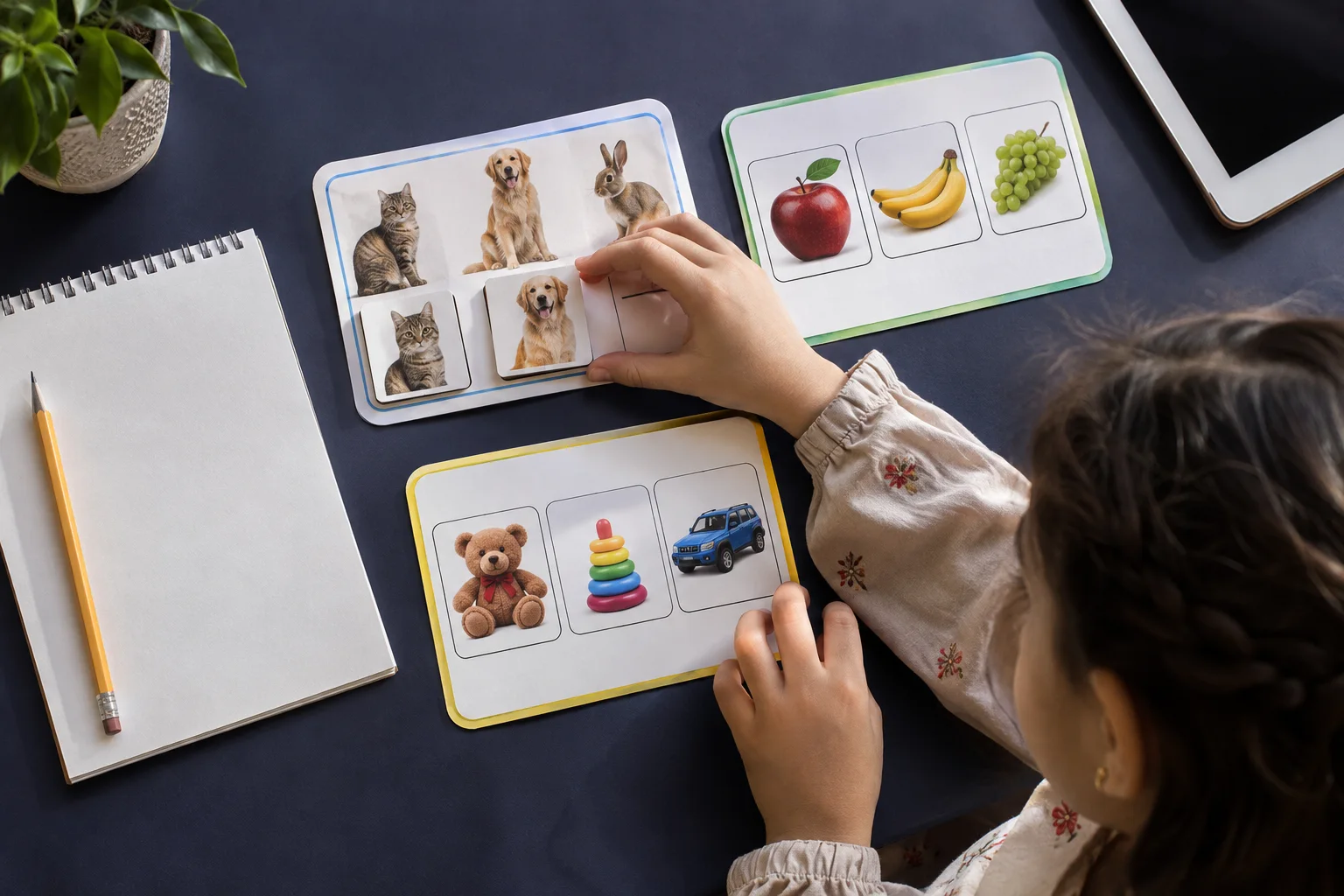
With animals, for example, observe recognising pictures, choosing an animal from a spoken description, stating a preference, and asking the teacher about theirs. The pattern shows which parts need practice. It does not require either restarting everything or skipping everything.
AI-generated scene illustration.
Allow time to learn the online interaction
Device controls, turn-taking, and an unfamiliar teacher can all affect early participation. Familiar content can help a child learn when to respond, how to choose a picture, and how to ask for help before further demands are introduced.
A parent can note one independent response and one moment that needed support. Give the teacher those two examples and discuss the next adjustment, rather than comparing the two lesson formats only in general terms.
Bring the ability list to the placement discussion; the assessment-report guide can help you ask how the recommended starting point was determined.
Distinguish consolidation from unhelpful repetition
Meeting a familiar word again does not necessarily waste learning time. Look for a new purpose: naming an animal may develop into describing it and then asking someone else a question about it.
If the same card always produces the same answer with no change in task, ask what role that activity plays in the current learning pathway. The explanation should connect the familiar material with what the child is working toward.
When consulting about 51Talk’s one-to-one online English lessons, bring the ability list and ask how previous learning is assessed, how the transition is planned, and which observations guide adjustments. Placement depends on the provider’s assessment; previous study does not guarantee a level exemption or credit for old course content.