Start with an expression your child knows and give it a small purpose in a real or pretend situation. The aim is to understand when it is useful and how to respond afterward, rather than reciting a classroom passage in a new location.
AI-generated scene illustration.
Try a restaurant choice at home
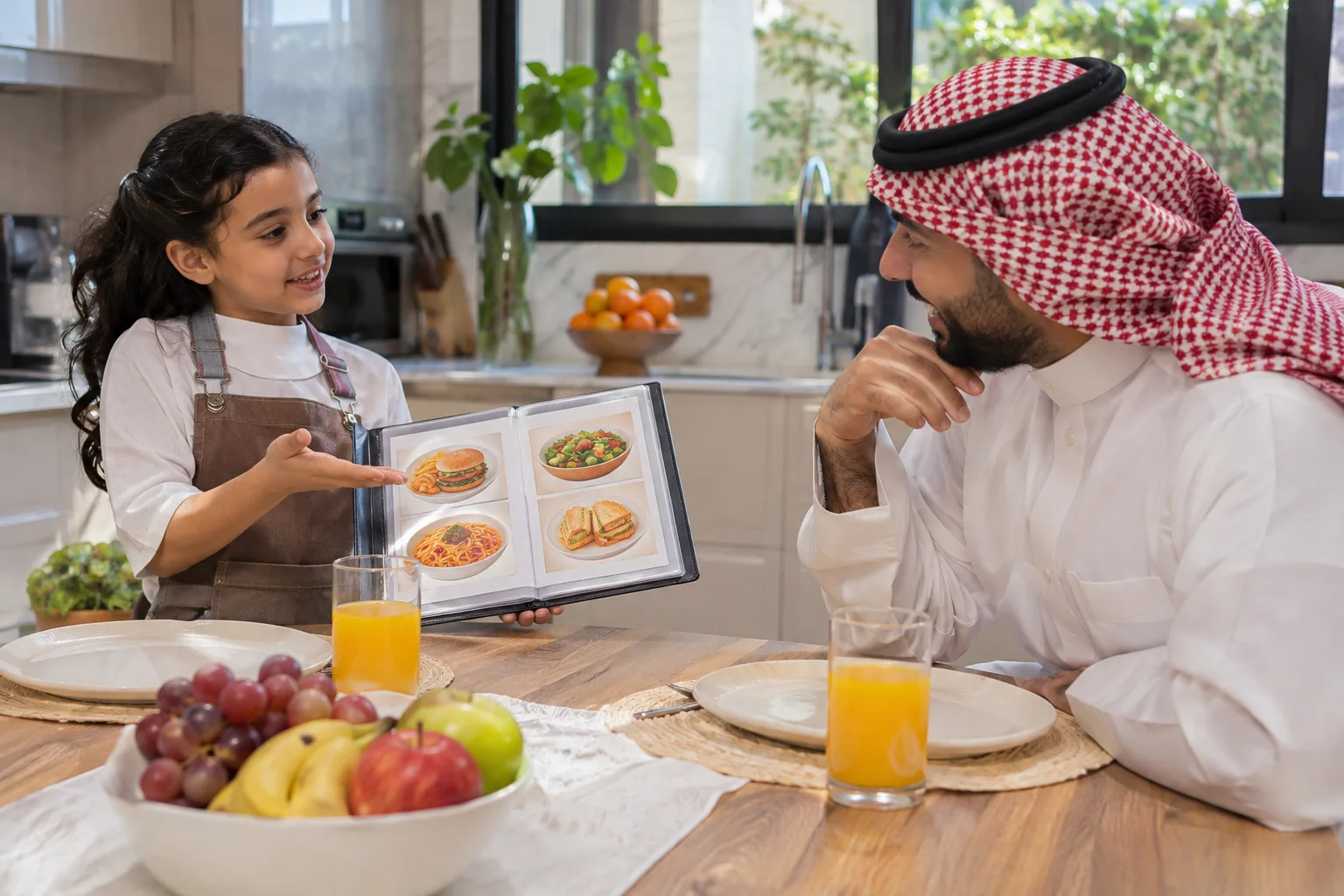
Make a simple menu with toy food or pictures. Your child might say “I’d like juice, please,” and you can ask “Apple or orange?” so the next response depends on their preference.
If they can only say “Juice,” acknowledge the meaning and offer a short model. Later, change the drink or exchange roles and observe whether the task still makes sense. This is a practice activity, not a standard script for restaurant service.
Use a pretend shop to find information
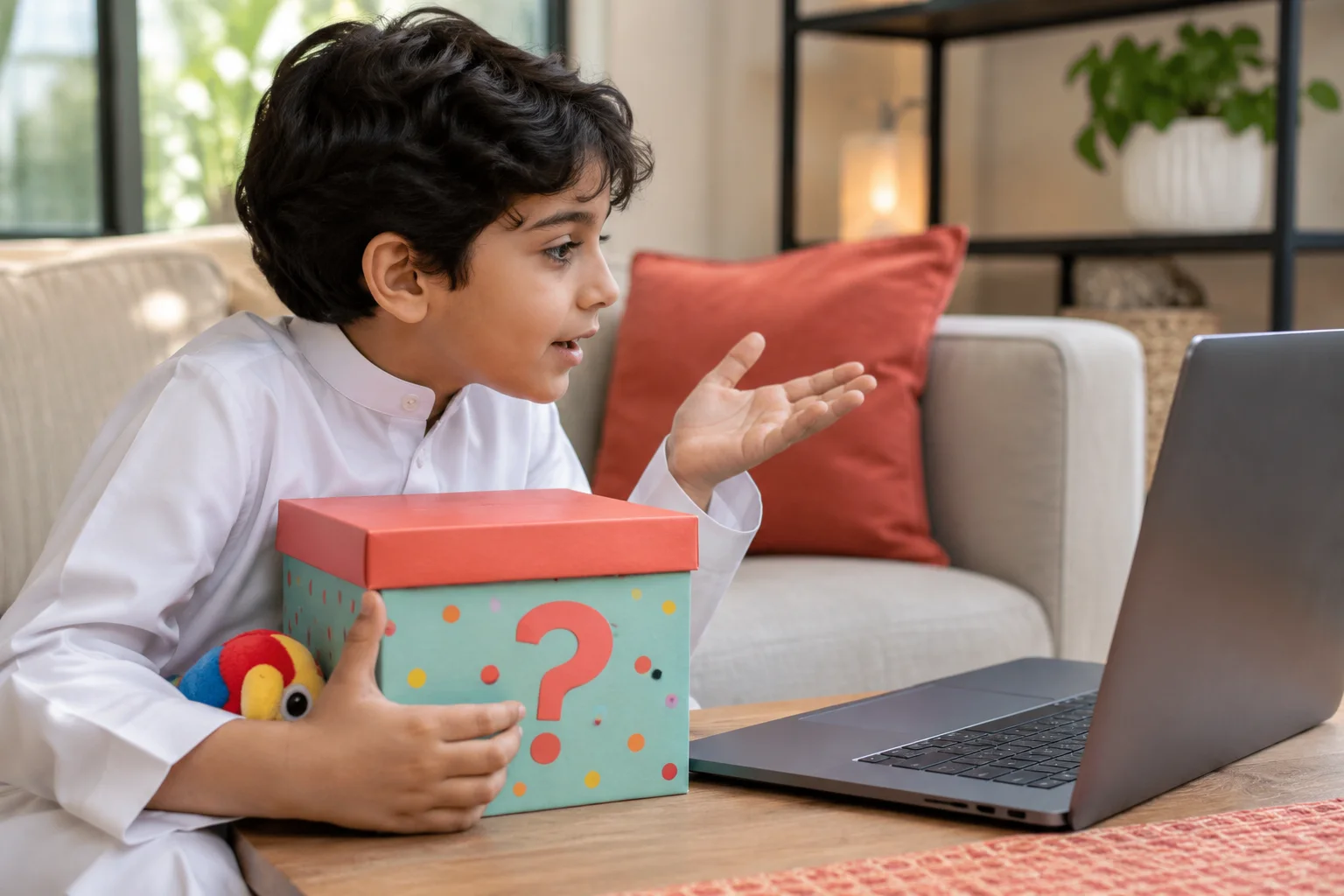
Set up a small shop with familiar objects and practise questions about colour, quantity, or price. The focus is asking for useful information and choosing, rather than calculating complicated amounts.
For example, a child looking for a blue item might ask “Do you have blue?” If the reply is no, help them choose another colour. This lets them experience a conversation that does not follow a fully memorised route.
AI-generated scene illustration.
Connect travel language with a real need
Before an outing, use pictures from the family’s plans to practise a relevant phrase, such as asking where the toilet is. Begin with a parent playing the other role. A real attempt can follow if the child is willing and an adult is present. Adults remain responsible for directions, transactions, and checking important information.
Practise asking for help, too, with “Again, please,” or pointing to a picture. Real communication allows support; every attempt does not have to become a complete performance.
Record a small example of transfer
Note what the child said, what changed from the lesson, and which help was needed. Moving from “I’d like an apple” in class to “I’d like water” with a home menu, without a full-sentence prompt, is a concrete example to discuss with the teacher.
One successful attempt does not show that every related situation is mastered. The next task can add a small change, such as responding to a follow-up question using the same familiar expression.
For more practice with responses and follow-ups, the conversation guide for children aged six to eight complements these everyday activities.
Bring the experience back into the lesson
Tell the teacher which response caused difficulty so classroom practice can address that point. When exploring 51Talk’s English lessons, ask how everyday communication topics connect with the child’s current learning stage.
A family does not need to turn a whole trip into an English test. A natural exchange that the child understands and wants to join provides useful information for the next step in learning.