Memorising every word can make a Show and Tell look polished at home and collapse in class. If a child forgets one sentence, they may lose the path through the entire speech. A speaking map is safer: it preserves the order of ideas while allowing natural language.
Build a five-part speaking map
Choose an object the child genuinely knows and likes. Put one keyword or small picture in each box:
- Name it: “This is my…”
- Origin: where it came from or who gave it to them.
- Three details: colour, material, parts, age, or function.
- A story: one moment connected to the object.
- Closing thought: why it matters or one question for the class.
The child should be able to explain each box in more than one way. That flexibility is the goal.
Rehearse in four rounds
In round one, let the child use Arabic or their strongest language to organise the story. Good thinking should come before English performance.
In round two, supply short English sentence starters: “I chose this because…”, “The most interesting part is…”, and “It reminds me of…”.
In round three, remove full sentences from the notes. Keep only the five keywords or pictures. Ask a different follow-up question after each attempt so the child practises responding, not reciting.
In round four, simulate the classroom once. The child stands, holds the object safely, speaks to two or three family members, and answers one question. Stop after a successful run rather than drilling until the delivery becomes flat.
Teach recovery phrases
Confident speakers do not remember everything; they know how to recover. Practise:
- “Let me think for a moment.”
- “The next thing I want to show you is…”
- “I forgot the word, but it is used for…”
- “Could you repeat the question, please?”
Praise a successful recovery more than a flawless recitation.
Keep parent editing under control
Parents often replace a child’s simple sentence with impressive vocabulary. That produces language the child does not own. Keep words the child can explain and reuse. Correct errors that block meaning, but do not rebuild every sentence into adult English.
A final checklist
- The talk has a clear beginning, three useful details, a personal story, and an ending.
- The card contains keywords, not paragraphs.
- The child can give the talk in two slightly different ways.
- The object can be held or displayed without distraction.
- The child has practised one follow-up question and one recovery phrase.
Getting live practice
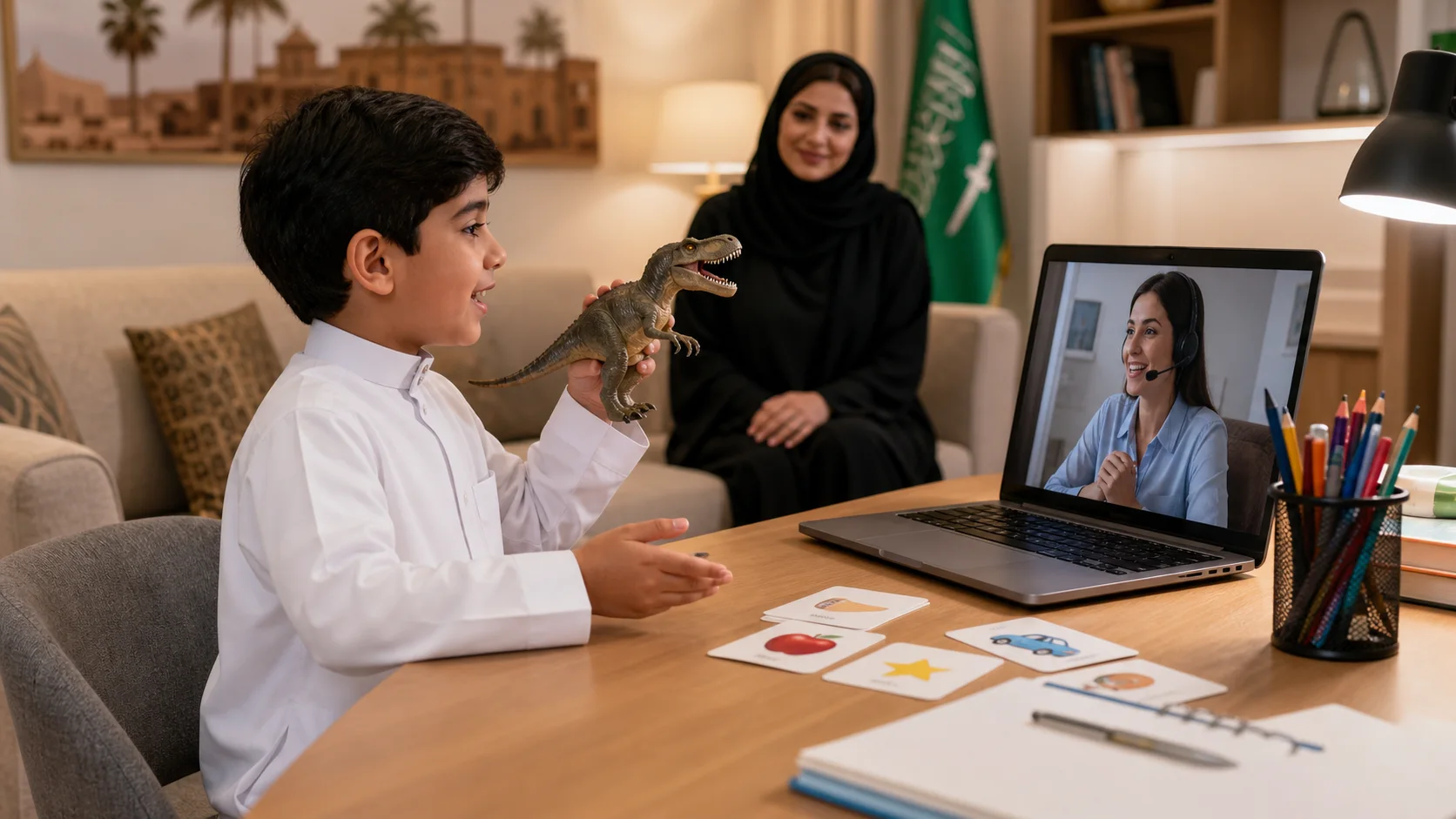
A patient listener helps a child adapt the same ideas to new questions. A trial lesson through 51Talk can be used as a short rehearsal space: share the speaking map, ask the teacher to avoid scripting, and observe whether the child can explain the object naturally.
The strongest Show and Tell is not the one with the most advanced vocabulary. It is the one the child can still deliver when the exact wording changes.