Independent participation can begin with a small response that does not rely on a parent supplying the answer. Before withdrawing support, identify what your child actually needs help with: the device, the task, the language, or the reassurance of having you nearby.
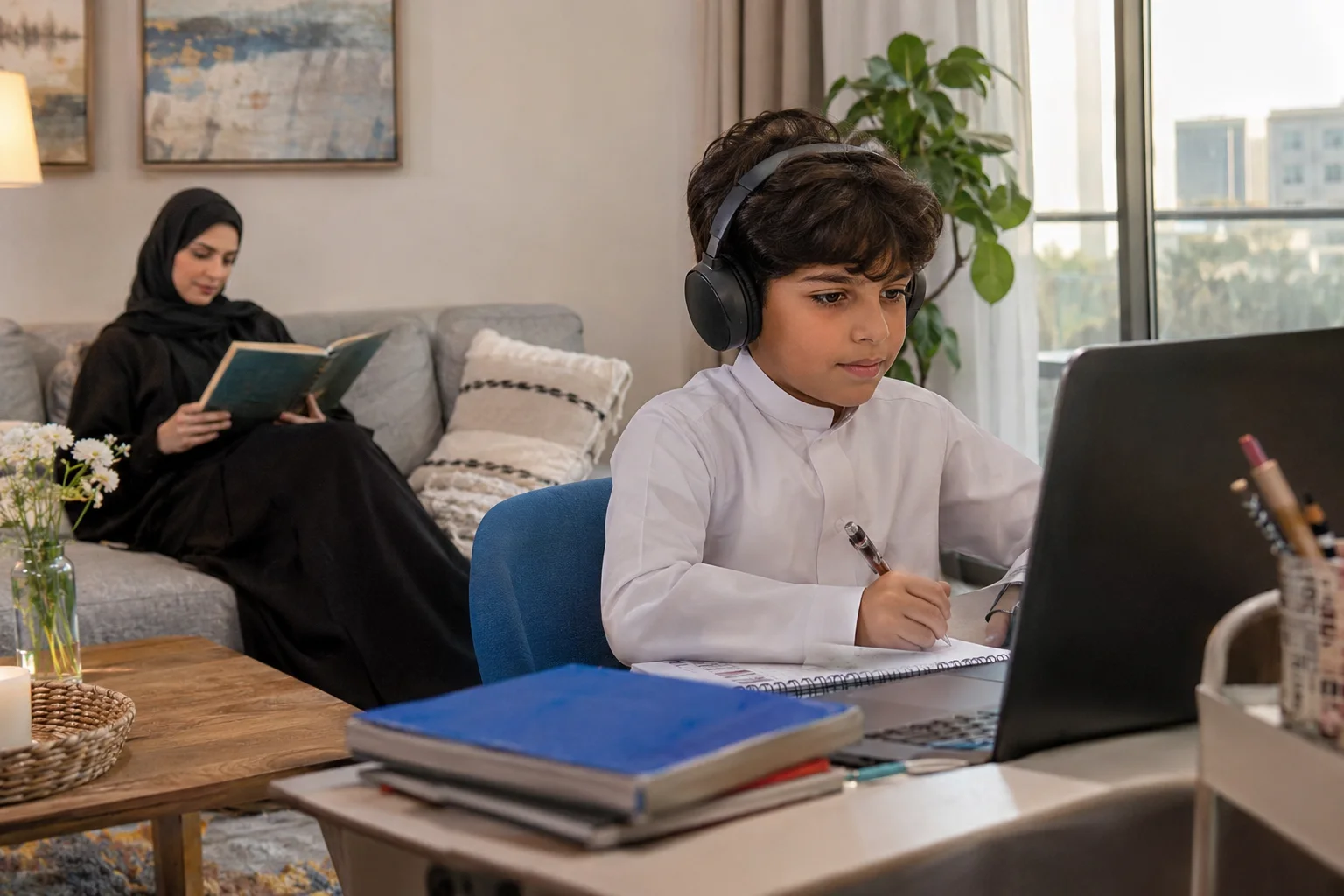
AI-generated scene illustration.
Identify the support being used
Some children cannot find the button when asked to select a picture. Others can use the device but do not understand the question. Another child may understand and still wait for a parent to nod before answering.
These situations call for different responses. Record a specific moment, such as “Could choose the picture but looked at me before every answer,” and discuss it with the teacher. Avoid treating every difficulty as a lack of English knowledge.
Agree when a parent should step in
Before the lesson, explain the support your child currently needs. Let the teacher try a picture, gesture, repetition, or demonstration first. If the task remains unclear, the parent can offer a brief explanation.
If the teacher asks “What colour is it?”, a parent might draw attention to the object rather than say “Answer ‘red.’” Once the child is participating, let the teacher resume the exchange. The parent should not become the main conversational partner.

AI-generated scene illustration.
Stop supplying answers before reducing your presence
A first step may be to stay nearby without answering. Later, move to a position that your child does not automatically look toward. Once the lesson routine is familiar, discuss whether you can be available mainly for technical help.
There is no single timetable for this change. If reduced support leaves your child unable to continue, temporarily return to the previous step while the teacher adjusts the wording or difficulty. Independence should be observed through participation rather than measured only by where a parent sits.
Make room for the child’s own answer at home
When your child wants to express something, you do not have to translate a complete English sentence for them to repeat. Establish what they want to say, then let them use familiar words, pictures, or a simple sentence. If needed, offer a beginning and leave a part for them to complete.
After the lesson, record one moment when your child responded without looking to you. This is more closely connected to independent communication than simply noting whether you were in the room.
If you are also weighing language support, the guide to whether a beginner needs an Arabic-speaking English teacher can help frame that separate decision.
Discuss supervision needs before enrolling
Ask 51Talk or another provider what classroom support is available to beginners, which device tasks parents need to manage, and how a teacher responds when a child waits for translation.
These questions help a family plan realistic support and judge the fit through actual interaction. The starting point can be modest: one answer that comes from the child instead of a parent.