A trial lesson can reveal how a child participates, what support a teacher offers, and whether the provider can explain an appropriate next step. One lesson cannot establish long-term results. It can, however, provide more useful evidence than asking only whether the child enjoyed it.
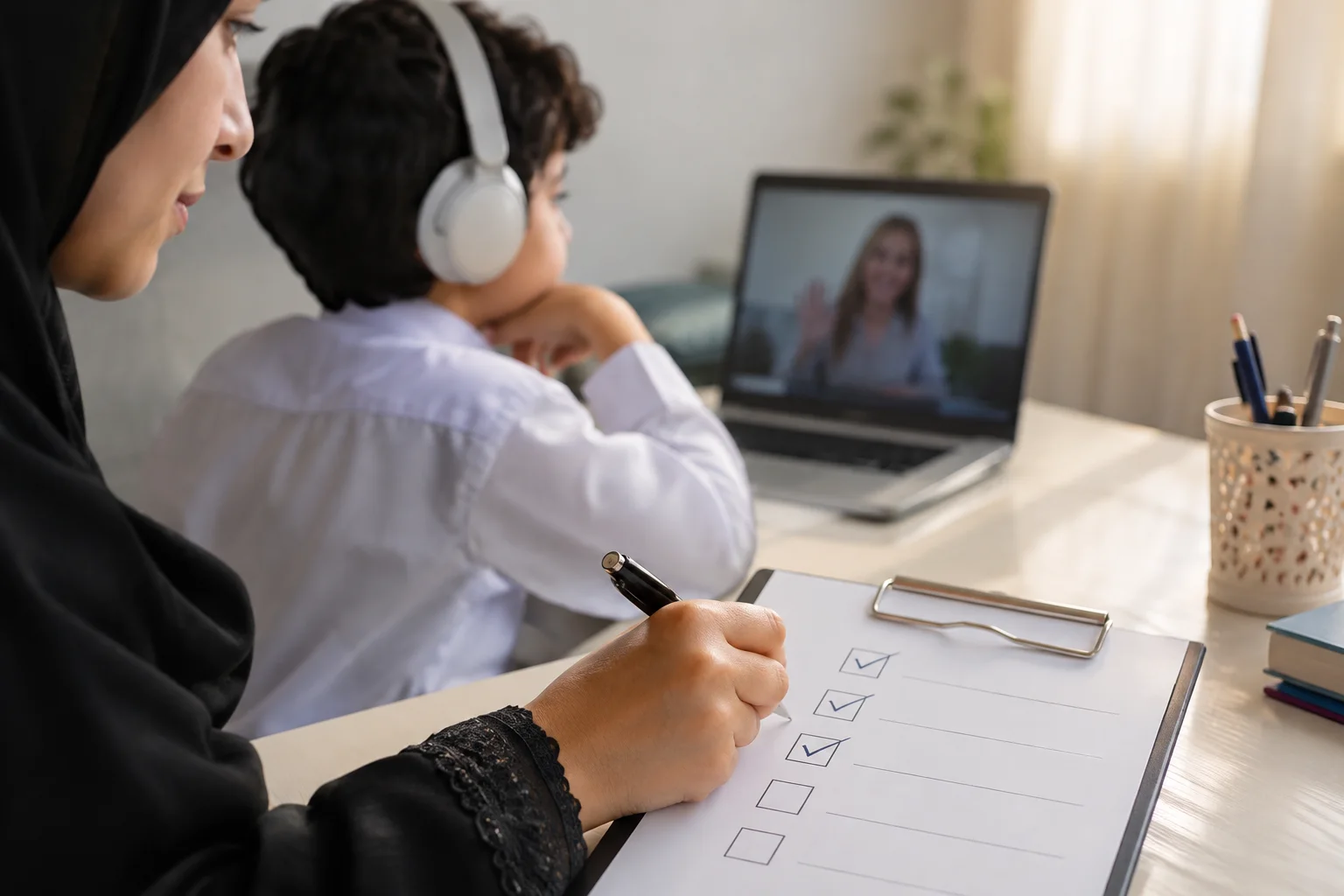
AI-generated scene illustration.
Explain the starting point before the trial
Briefly describe previous exposure to English, familiar topics, and the question you most want to explore. For example: “Recognises colours but does not always understand the full question,” or “Talks with family but says less to an unfamiliar teacher.”
Set up the device and sound beforehand. If microphone repairs take up much of the lesson, record the technical difficulty separately from language performance. What you observed was affected by more than the teaching interaction.
Record a complete exchange
| Area | What to record |
|---|---|
| Understanding the task | Did the child know whether to point, choose, or answer? How did the teacher explain? |
| Opportunity to speak | Was there space to respond, or was an answer quickly supplied? |
| Support | When the child paused, was a picture, gesture, example, or complete answer offered? |
| Response to change | Could the child respond when the picture or question order changed? |
| Participation | Which activity encouraged participation? When did avoidance begin? |
| Next step | Could the teacher or consultant explain the observed starting point and a suitable next task? |
This record is not an examination paper for your child. One or two exchanges described clearly can provide enough material for a useful consultation.
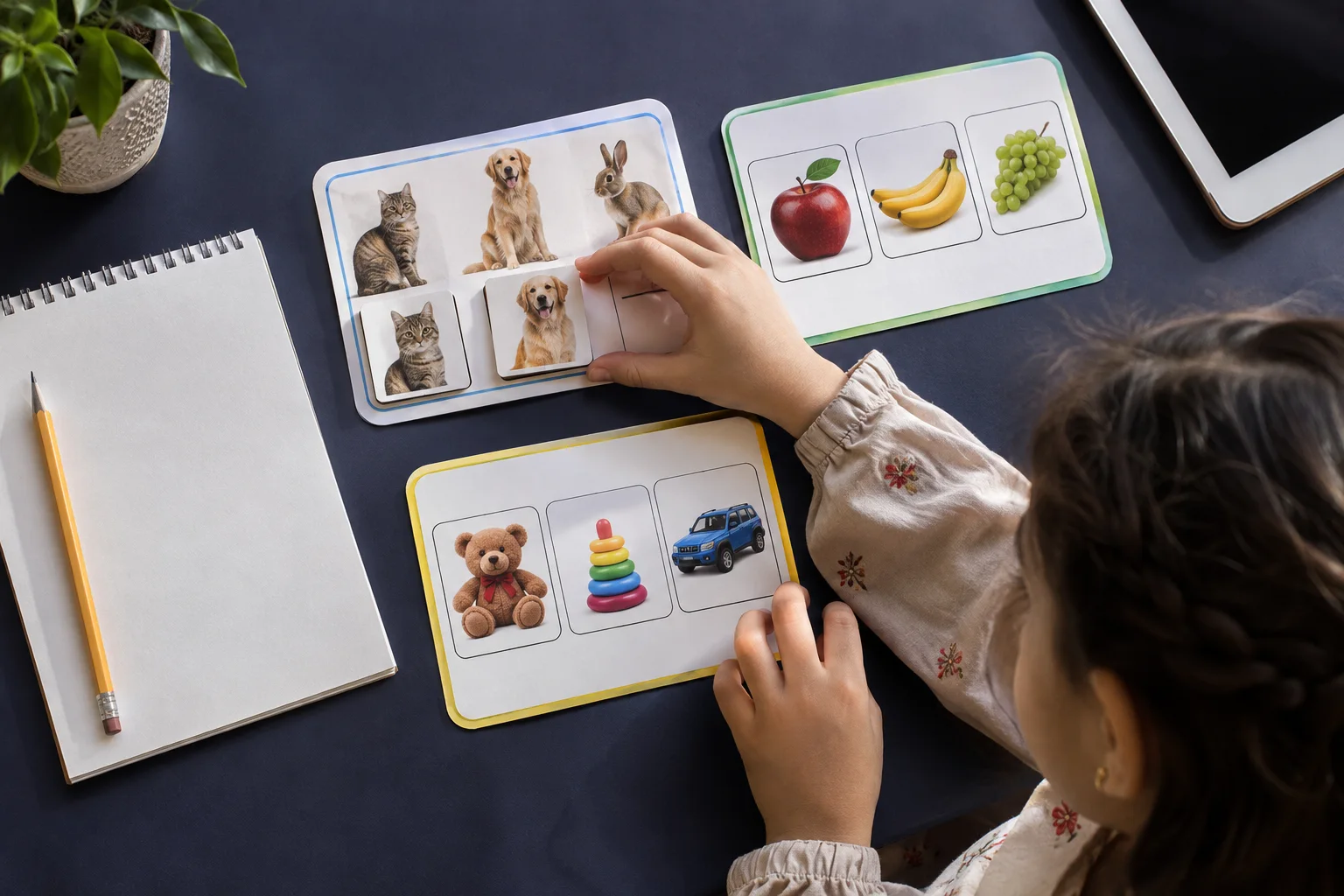
AI-generated scene illustration.
Repetition does not show the whole picture
Repeating after a teacher can help a child enter a task, but also watch for understanding. Does the teacher change the example and leave a personal choice for the child? You do not need to add a surprise test to the trial.
A quiet beginning does not automatically make the trial unsuccessful either. Observe the support offered and whether the child can participate afterward.
If pronunciation feedback is a priority, add the observations in the pronunciation trial-class checklist to your record.
Separate the learning discussion from purchase terms
Ask where the provider suggests starting, why, and what will be observed next. Then separately check lesson quantities, validity, attendance or absence rules, fees, and refund conditions against the actual offer. An enjoyable activity cannot replace understanding the purchase.
If you are exploring 51Talk’s English programme, share your observation record with the consultant and discuss its relevance to your child. You do not need to decide because the activity was lively, or reject the lesson because your child did not show everything they know. Let the observations and subsequent explanation support the decision together.