Answering questions about colours, numbers, and preferences is a useful beginning. Conversation also involves noticing what you do not know and asking someone for that information. Start with something your child genuinely wants to find out, rather than a long list of question forms to memorise.

AI-generated scene illustration.
Give the question a real purpose
If the teacher and child can both see the same picture, asking “What colour is it?” may feel like following an instruction. Change the situation slightly: keep a toy outside the camera view so the child needs to ask questions to identify it.
This information gap gives a question a purpose. Keep the task small, such as finding out a hidden toy’s colour or someone’s favourite fruit. Avoid introducing unfamiliar words, complex question patterns, and new game rules all at once.
Swap roles using a familiar question
If your child often hears “What do you like?”, invite them to ask the teacher. The teacher can first demonstrate the change of roles and then respond in a way that leaves room for the exchange to continue.
For example: “What do you like?” “I like cats.” With a prompt, the child might follow up with “What colour?” Their wording may be incomplete at first, but they are practising how to use another person’s answer to move the conversation forward.
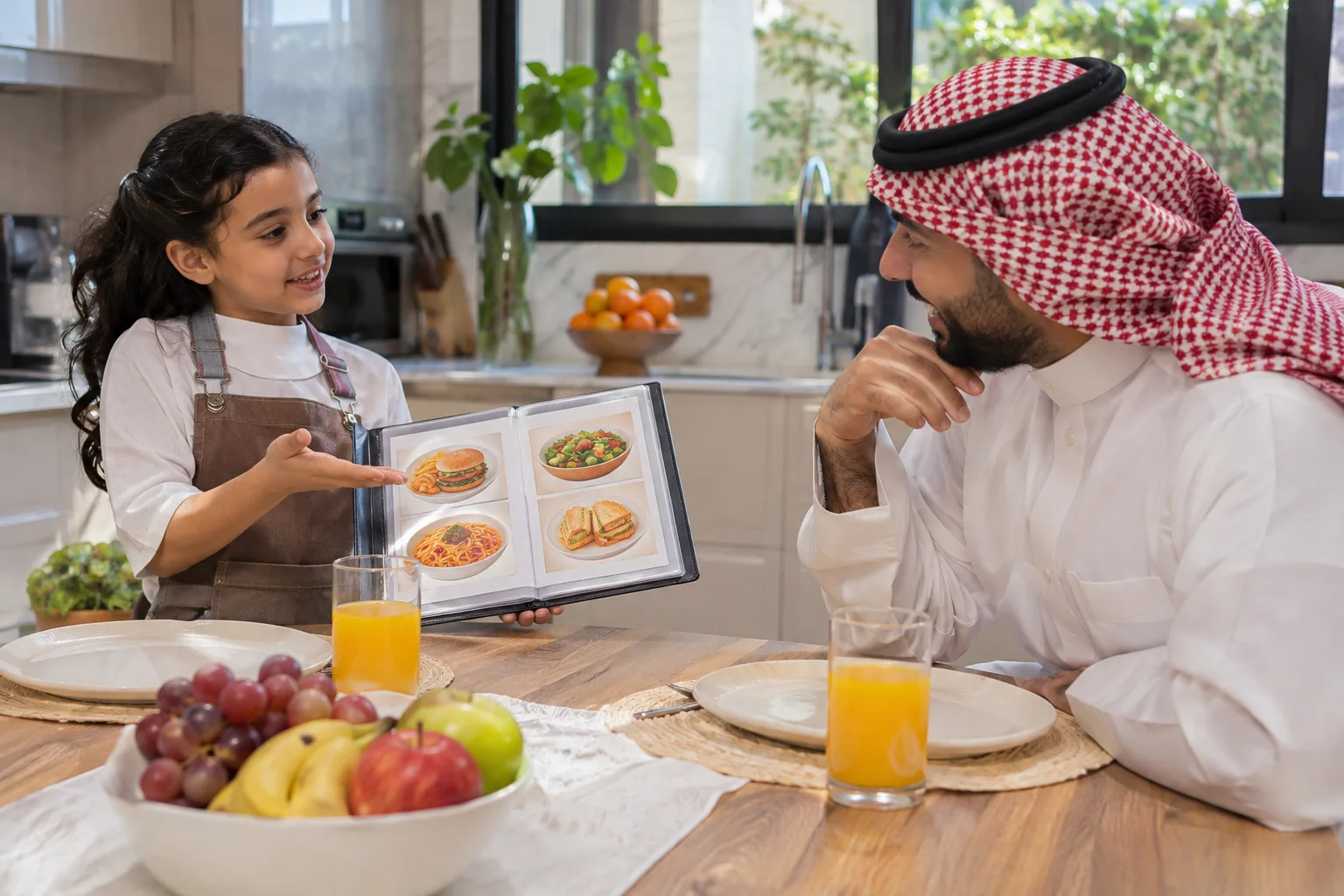
AI-generated scene illustration.
Use prompt cards without replacing listening
A card showing “what,” “where,” or a simple place symbol can help a child remember a question. If they read the next card regardless of the answer they hear, make the activity simpler.
Work on one follow-up at a time. When the teacher says “I have a dog,” the child can try “What’s its name?” Once that connection is familiar, introduce a different detail. These are practice examples, not accounts of actual students.
The conversation-practice guide for children aged six to eight gives related ideas for building an exchange beyond a single answer.
Create opportunities to ask at home
Choose a family photo whose details are not known to everyone. Your child can ask about a person, place, or favourite activity. After the answer, point or gesture if another small question would help, instead of saying the whole question for them.
Record an instance of seeking information rather than counting question marks. Did your child listen to the answer? Ask something connected to it? Use a familiar question with a different person?
When exploring 51Talk’s one-to-one lessons, ask whether lessons include role swaps and opportunities for the child to ask questions. Families hoping for more initiative can observe whether the child sometimes becomes the person who starts a topic.