If you’ve ever started learning a language only to quit two months in, the problem probably wasn’t discipline — it was language selection. Choosing a language that’s structurally close to English dramatically reduces the hours you need to reach conversational fluency. The Foreign Service Institute (FSI) has measured this for decades, and the gap is not small: a Romance or Germanic language requires roughly one-third the study time that Mandarin or Arabic demands.
This guide walks through the FSI rankings, what they actually mean for your daily practice, and how to pick a language that matches your real-world goals — not just the difficulty charts.
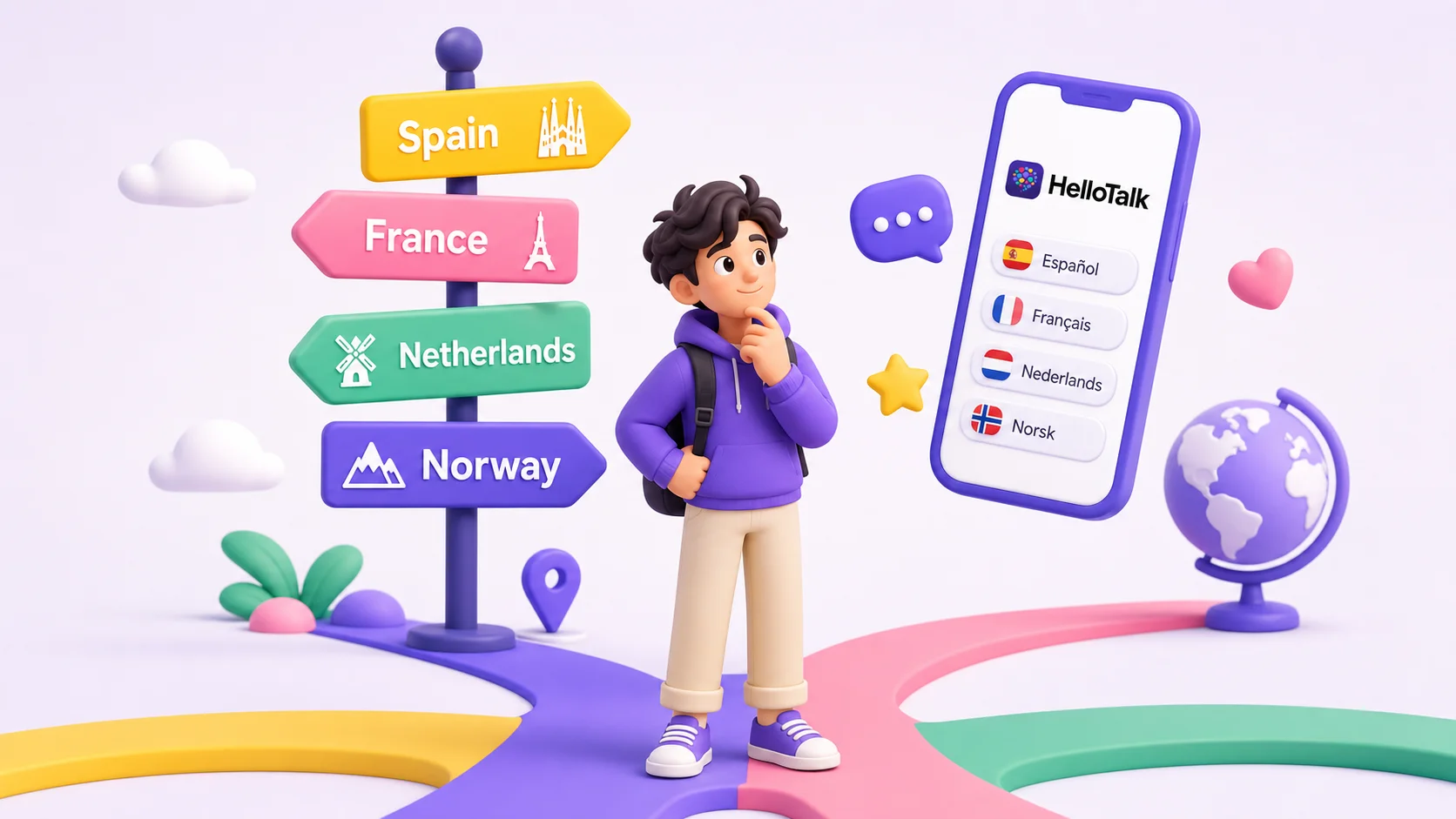
Why Language Choice Matters More Than Study Intensity
The instinct when learning fails is to try harder — more vocabulary cards, more grammar drills. But difficulty is built into the language itself. Japanese in college lasted two months before hiragana alone felt insurmountable. German’s grammatical case system was a wall. Spanish, taken up with a friend’s encouragement, produced a real thirty-minute conversation within three months.
That’s not a motivation story. It’s a structural one. Picking a language that shares roots with English means you arrive with existing vocabulary, familiar grammar patterns, and pronunciation systems that don’t require building a completely new mental framework from scratch.
FSI Language Difficulty Rankings: Which Languages Are Closest to English
The Foreign Service Institute categorizes languages by the average time an English native speaker needs to reach professional working proficiency. Category I languages are the most accessible, averaging 600–750 hours — compared to 2,200+ for Category IV languages like Arabic or Mandarin.
| Language | FSI Estimated Weeks | Similarity to English | Core Advantage | Learner Community |
|---|---|---|---|---|
| Spanish | 24–30 weeks | Very high | Huge cognate vocabulary, consistent pronunciation, widest global reach | 15M+ learners on exchange platforms |
| French | 24–30 weeks | High | Written vocabulary heavily overlaps with English; high international use | 8M+ learners |
| Italian | 24–30 weeks | High | Phonetically transparent; strong cultural appeal | 5M+ learners |
| Portuguese | 24–30 weeks | High | ~80% vocabulary overlap with Spanish; easy pivot if you know one | 6M+ learners |
| Dutch | 24–30 weeks | Very high | Closest Germanic language to English; lowest structural friction | 2M+ learners |
| Norwegian | 24–30 weeks | High | Small core vocabulary, natural intonation, strong in Northern European contexts | 1M+ learners |
FSI data is calibrated for English native speakers studying roughly 25 hours per week at intensive pace. For most learners, CEFR A1/A2 (basic conversational ability) for these languages requires 150–250 hours of focused practice — a far more reachable initial target.
Matching a Language to Your Actual Goals
Difficulty rankings are only one input. What you’re going to use the language for shapes which choice makes the most sense.
| Goal | Recommended Language | Why | What to Prioritize |
|---|---|---|---|
| Travel | Spanish / Italian | Covers Europe and Latin America; very high-frequency use in tourist contexts | Real-time speaking practice with native partners |
| Career | Spanish / French / German | Global business languages; UN official languages | Professional writing correction + structured conversation |
| Culture & media | French / Japanese / Korean | Literature, film, K-drama, anime — rich native content ecosystems | Immersive listening and cultural exchange |
| Entertainment | Korean / Japanese / Spanish | K-drama, anime, and Spanish-language streaming content are all mainstream | Fandom communities + subtitle-based reading practice |
A Closer Look at the Easiest Languages
Romance Languages: The Natural Starting Point
Spanish, French, Italian, and Portuguese all descended from Latin, which means they share a large inventory of cognates with English — words with shared roots that you already half-know. “Important/importante,” “nation/nación,” “culture/cultura.”
- Spanish: Pronunciation is almost entirely phonetic. Each letter maps to one sound with very few exceptions. Consistently the most-recommended first language for English speakers.
- Italian: The rhythmic quality makes pronunciation practice feel less mechanical. If you already speak Spanish or French, crossover is fast.
- Portuguese: Around 80% vocabulary overlap with Spanish means that if you know one, the other has a noticeably flattened learning curve.
Germanic Languages: Shared Roots With English
Dutch and Norwegian belong to the same language family as English, and that shows immediately at the vocabulary level.
- Dutch “water” is water. Dutch “hand” is hand. The cognate density is high enough that beginners often recognize written content faster than expected.
- Norwegian has no case system, a straightforward sentence structure, and fewer irregular verbs than most European languages — a genuinely beginner-friendly grammar without the pitfalls of German or Russian.
For Mandarin Native Speakers: Japanese and Korean Have Structural Advantages
Mandarin speakers often find Japanese easier than any European language — shared characters (kanji/hanzi) significantly reduce the reading burden from day one. Korean similarly benefits from a large inventory of Sino-Korean vocabulary with Chinese roots. The pronunciation and natural speech patterns still need real conversation practice to stick, but the vocabulary foundation is much larger than it would be for English speakers.
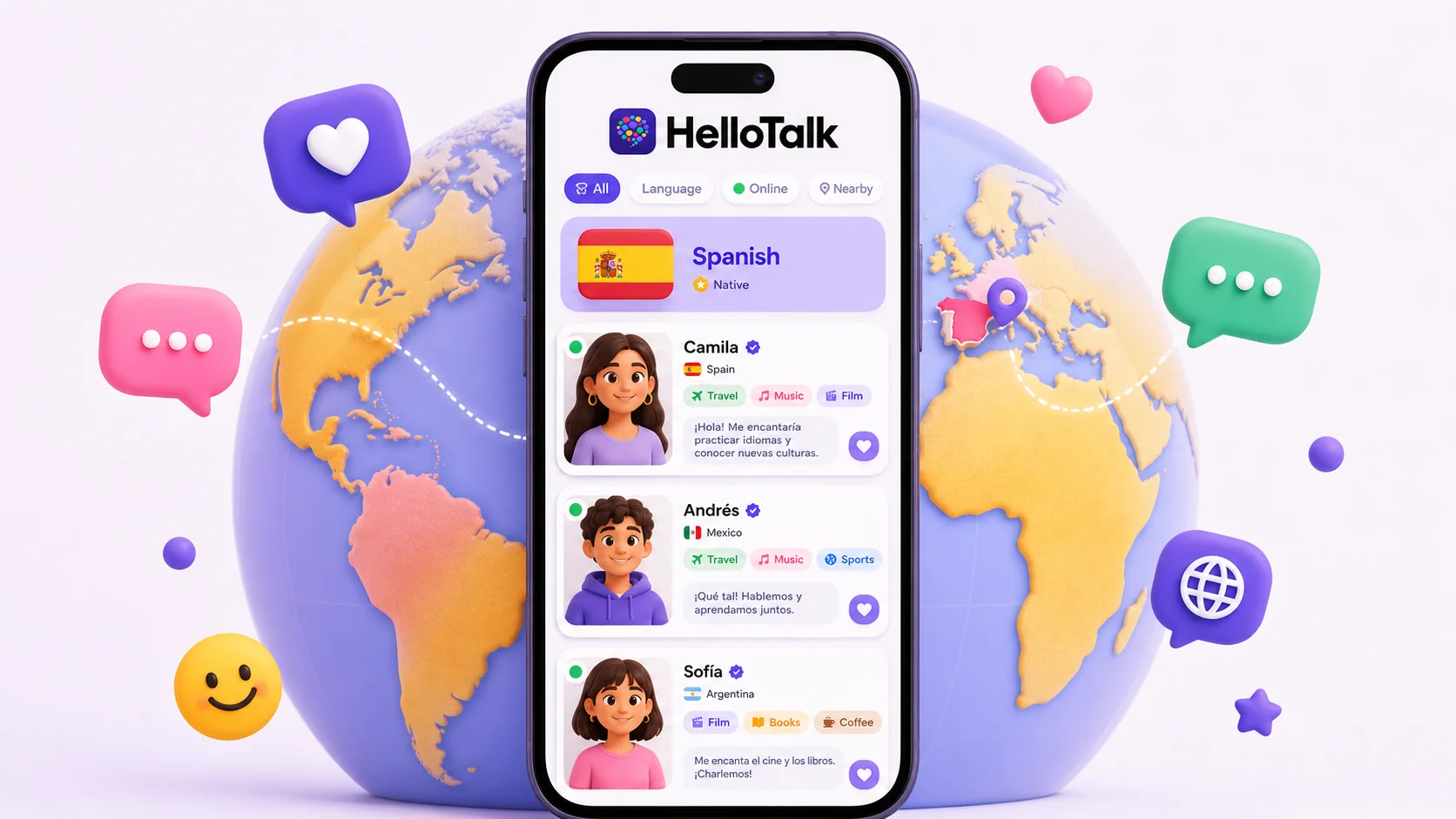
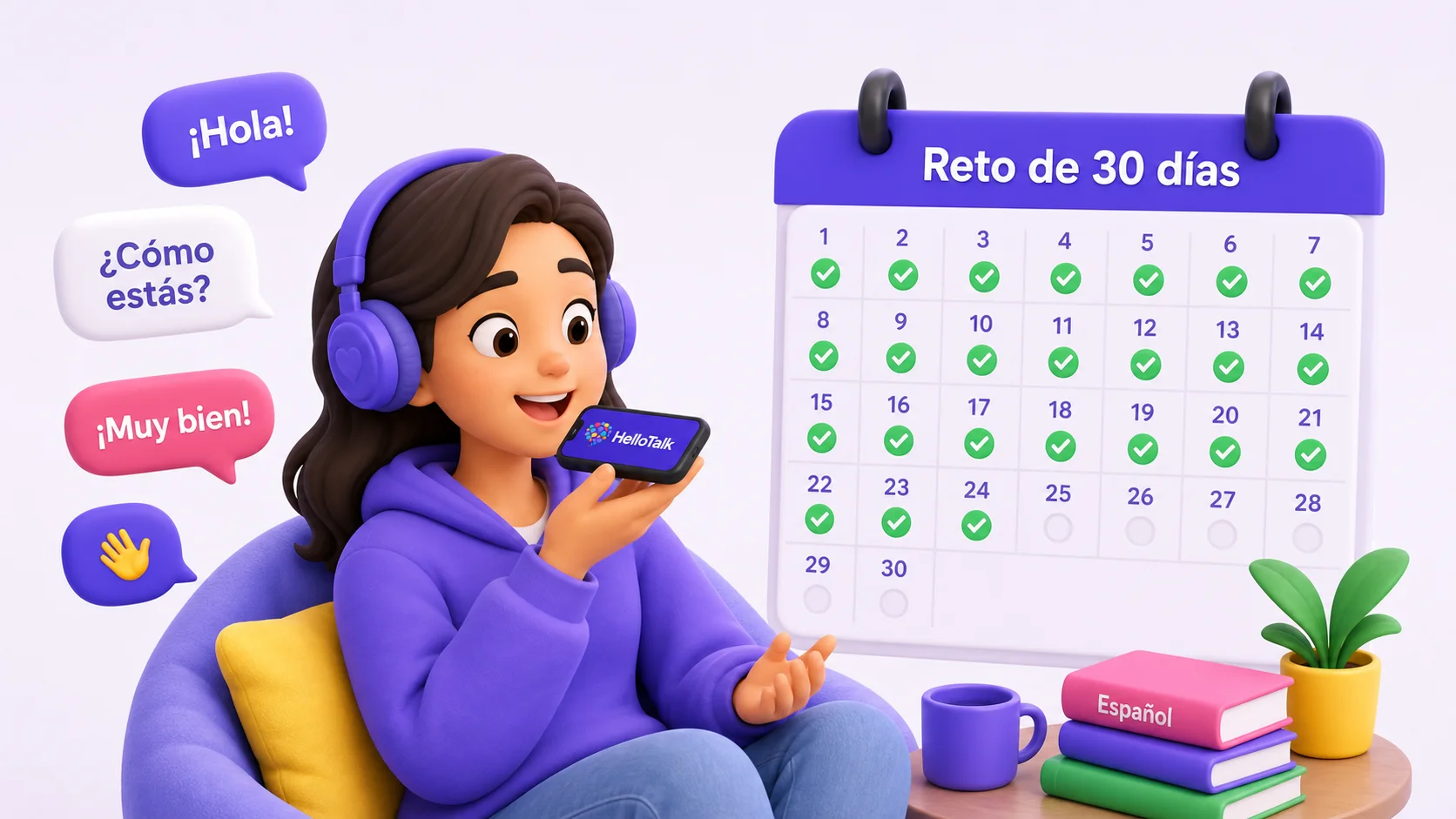
A 30-Day Practice Plan for Spanish (Adaptable to Any Category I Language)
The structure below represents a consistent beginner path that builds toward CEFR A2 by the end of week four — not through intensive drilling, but through regular, low-anxiety speaking practice.
Week 1: First Contact (CEFR A1 Foundation)
- Daily task: Find one Spanish native speaker through a language exchange app (HelloTalk, Tandem, etc.), send a 30-second voice introduction
- Focus: AI-assisted translation and real-time correction to catch errors early
- Realistic outcome: 50 high-frequency words; able to exchange basic greetings
Week 2: Expand Vocabulary (Topic-Driven Input)
- Daily task: Join a live audio room or conversation session on a daily topic — food, weather, hobbies — and follow along for 15–20 minutes
- Focus: Grammar correction + listening to natural speech rhythms
- Realistic outcome: Active vocabulary around 200 words; able to describe simple situations
Week 3: Produce Output (Break the Silent Learner Pattern)
- Daily task: Record a 30-second Spanish “daily update” and share it with a native speaker for correction
- Focus: Native speaker feedback; getting comfortable making mistakes in real time
- Realistic outcome: Beginning to develop intuition for what sounds right; producing without overthinking
Week 4: Real Conversation (Approaching CEFR A2)
- Daily task: Schedule a 15-minute video call with a regular language partner — half Spanish, half your native language
- Focus: Reciprocal language exchange format
- Realistic outcome: Able to hold a simple topic conversation; building a consistent practice habit
Comparing Your Practice Options
The structure of your practice matters as much as the hours. Here’s how common tools compare on the dimensions that actually move fluency forward:
| HelloTalk | Duolingo | Babbel | Speaky | |
|---|---|---|---|---|
| Real human conversation | Core feature, 70M+ users | None | None | Available but smaller user base |
| AI correction | Real-time grammar + translation | Score-based | Score-based | None |
| Language coverage | 260+ | ~40 | ~14 | Limited |
| Free access | Core features fully free | Free (ad-supported) | Primarily paid | Free |
| Pronunciation training | Proprietary phonetics + SpeakUp AI | Basic voice recognition | Limited | None |
Choosing an easier language removes a lot of friction. But without real conversation practice, even the simplest language can plateau quickly. Apps that connect you with native speakers from the start — rather than building up to that as a “reward” after drilling enough grammar — tend to produce faster speaking progress.
FAQ
Q1: What is the easiest language to learn?
For English speakers: Spanish, based on FSI data and widespread learner feedback. For Mandarin speakers: Japanese tends to be the easiest entry point because of shared characters. The most honest answer is that the easiest language for you is the one you have the most sustained reason to keep practicing — motivation is the real variable once you’ve chosen a structurally accessible option.
Q2: What are the top easiest languages for English speakers?
The three strongest candidates: Spanish, Dutch, Norwegian. All three have close structural ties to English, strong cognate vocabularies, and large active communities for native speaker practice.
Q3: What’s the fastest language to learn?
By FSI data, Dutch reaches professional working proficiency fastest for English speakers (around 24 weeks at intensive pace), followed closely by Norwegian and Spanish. Speed assumes consistent high-quality input and output — the output side requires actual speaking practice, not just review.
Q4: For Chinese native speakers, which language is easiest?
Japanese is typically the most accessible — shared characters reduce the reading load significantly. Korean follows for similar reasons (Sino-Korean vocabulary). Spanish is harder for Chinese native speakers than for English speakers, but direct conversation practice with native speakers helps close the gap on pronunciation and natural phrasing.
Q5: Is there a completely free way to learn these languages?
Yes. A solid free stack:
- Language exchange apps (e.g., HelloTalk): free core features — language exchange, speaking practice, AI translation across a wide range of languages
- YouTube immersion content: Dreaming Spanish is an example of high-quality free comprehensible input for Spanish learners
- Anki: free spaced repetition flashcard system for vocabulary retention
This covers input, output, and review — the three essential practice components — at no cost.
Language learning doesn’t have to be a years-long slog. Choosing a structurally accessible language and getting into real conversation practice early — rather than staying in drill mode until you feel “ready” — is what actually compresses the timeline. The easiest language is the one you pick up and use from week one.