A child may recognise “apple,” “cat,” and “blue,” yet fall silent when those words appear in a question. Recognising a word is different from understanding a question, identifying the information it asks for, and forming a reply. Before adding more vocabulary, work out where the difficulty occurs.

AI-generated scene illustration.
Use one familiar word to explore the difficulty
If your child knows “apple,” ask them to point to a picture of one. Then try “Is it an apple?” and “What is it?” These tasks place different demands on the listener. A correct pointing response does not automatically show that every question form is understood.
Discuss the pattern with the teacher. Does your child recognise the word when heard? Understand the whole instruction? Know the kind of answer the question requires? A specific observation helps distinguish these possibilities.
Connect the instruction with a clear meaning
Pictures or gestures can support the spoken language at first. A teacher might say “Point to the apple” while demonstrating pointing, then reduce the gesture as the task becomes familiar. Choosing or moving an object lets a child show understanding before they can answer in a sentence.
Immediate translation of every question can make direct understanding harder to observe. Agree that the teacher will have an opportunity to repeat, demonstrate, or show a choice before a parent translates or answers.
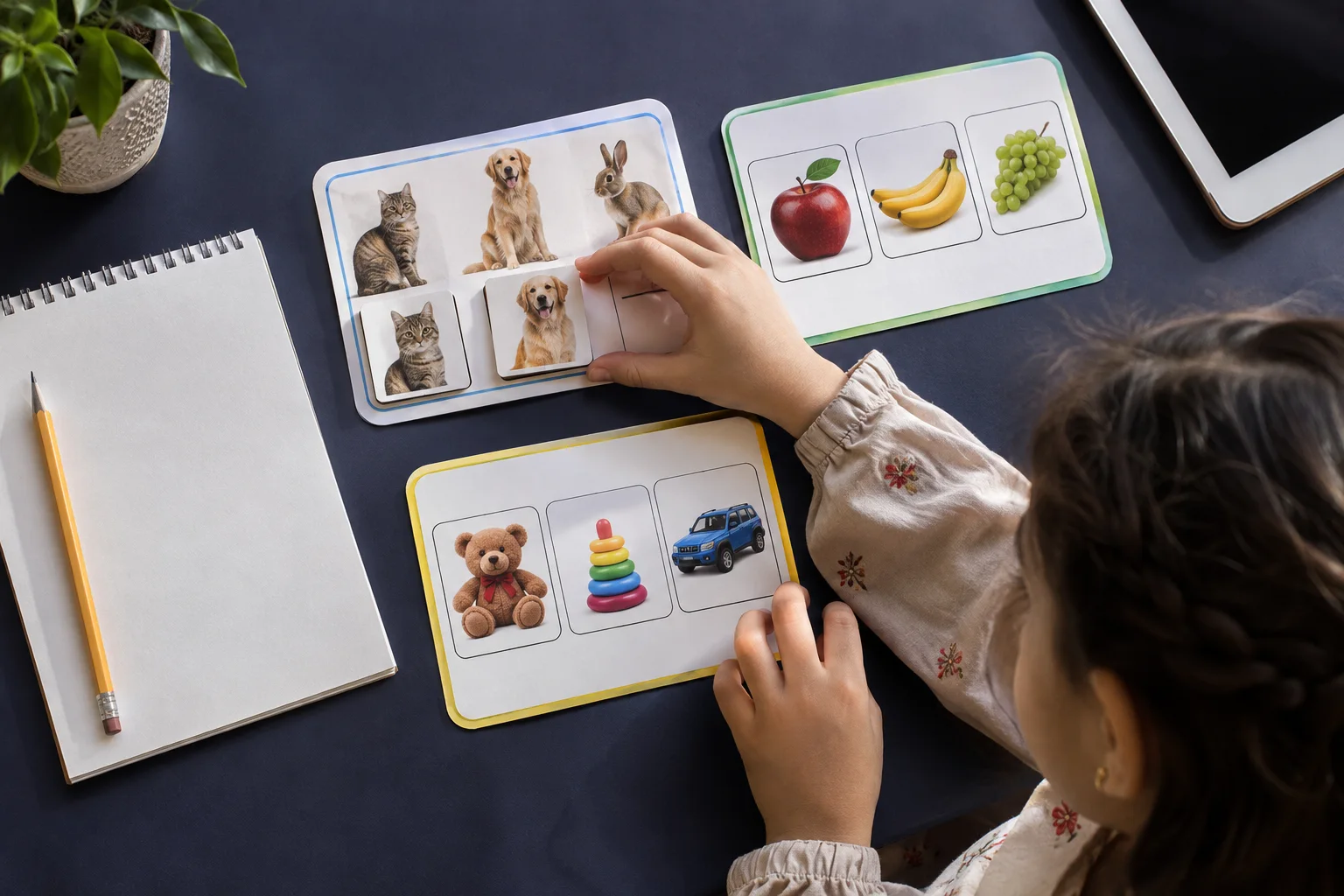
AI-generated scene illustration.
Keep the question pattern manageable
Begin with familiar language and avoid changing too many features at once. “Do you like bananas?” can be answered with “Yes,” whereas “What do you like?” calls for naming a preference. Rapid switching may encourage a memorised guess instead of careful listening.
Use a familiar question in more than one small situation before introducing further changes. The aim is to understand what information is being requested, rather than to attach one fixed answer to a picture.
Leave room for the child to work out the question
If your child pauses, the teacher can offer two pictures or a sentence starter. An immediate answer is not always necessary, and the parent does not need to fill the silence. Notice which kind of support brings the child back into the exchange.
At home, try a simple task with toy cars: “Give me the red car.” Once the instruction is familiar, change the colour or position. Keep the activity short and connected to play rather than turning it into another test.
For a related classroom difficulty, the guide to missed teacher instructions explores how familiar conversation differs from following a task.
Tell the teacher what you actually noticed
A note such as “Understands ‘Do you like…?’ but needs a choice after ‘What do you like…?’” gives the teacher something concrete to use when adapting the lesson.
When exploring English learning with 51Talk, ask during a consultation or trial how a child is supported when a question is not understood. Observe how that support changes, alongside the answers themselves, when judging whether lessons fit your child.